

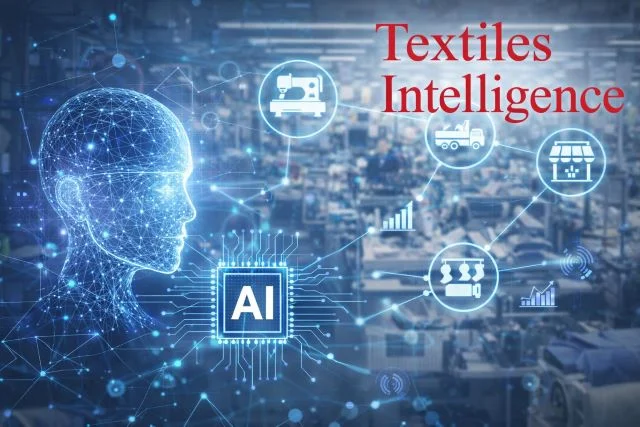
The textile and apparel industry is accelerating its adoption of artificial intelligence (AI) across key stages of the value chain, from design and production to logistics, although structural and cultural barriers continue to limit its full impact, according to a recent industry report.
The study by Textiles Intelligence highlights that AI is increasingly being deployed to improve efficiency, reduce waste and enhance decision-making, transforming what has traditionally been a fragmented and reactive industry into a more data-driven and responsive ecosystem.
In product design, companies are leveraging AI to analyze historical sales data and consumer behavior, allowing designers to make more informed decisions about styles, materials and production volumes. By aligning creative processes with real market demand, brands are aiming to reduce excess inventory and improve sell-through rates.
Manufacturing operations are also seeing significant benefits from AI integration. Predictive analytics and machine learning tools are helping factories identify potential equipment failures before they occur, optimize machine utilization and maintain consistent production quality. These capabilities are particularly important in large-scale textile operations, where even minor disruptions can lead to costly delays.
AI is further being applied in distribution and logistics, where it supports route optimization, demand forecasting and supply chain risk management. Advanced systems can analyze real-time data to recommend alternative shipping routes, adjust production schedules or flag potential disruptions, enabling companies to respond more quickly to changing conditions in global markets.
Also read: Jeanologia Launches ‘Billy AI’ to Transform Denim Laser Design
Despite these advancements, the report emphasizes that the most substantial efficiency gains will only be realized when AI systems are fully integrated across the entire textile and apparel value chain. Currently, most companies are implementing AI in isolated functions rather than as part of a unified, end-to-end strategy.
This fragmented approach reflects the broader structure of the industry, where different stakeholders—including brands, manufacturers and suppliers—operate under separate incentives and priorities. As a result, aligning objectives across the value chain remains a significant challenge.
For instance, a spinning mill focused on maximizing production efficiency may not directly benefit from a retailer’s efforts to minimize markdowns, even though both are interconnected within the same supply network.
Beyond structural issues, cultural resistance within organizations is also slowing the adoption of integrated AI systems. The report notes that increased transparency is essential for linking different stages of production, but many stakeholders are hesitant to share data or expose inefficiencies.
Design teams may resist constraints imposed by production capabilities, while manufacturers may be reluctant to reveal operational weaknesses. Similarly, commercial teams may question forecasts that are influenced by manufacturing data rather than market intuition.
Addressing these challenges will require more than technological investment. Industry experts suggest that companies must adopt a more collaborative approach, aligning incentives and embracing system-wide optimization rather than focusing solely on individual performance metrics.
The report argues that a shift toward shared objectives is critical for unlocking the full potential of AI. This includes accepting trade-offs that may not benefit individual functions but contribute to overall efficiency and profitability across the supply chain.
The urgency of this transformation is underscored by persistent inefficiencies within the textile and apparel industry, including overproduction, excess inventory and frequent markdowns. As competition intensifies and sustainability pressures mount, companies are increasingly seeking ways to streamline operations and reduce waste.
AI is seen as a key enabler of this transition, offering the potential to synchronize supply with demand, minimize resource use and improve responsiveness to market trends.
However, the report describes the current state of AI adoption as a series of “connected islands,” where individual applications exist but lack full integration. While progress is being made, a truly unified system has yet to emerge.
Looking ahead, improvements in data infrastructure, along with stronger collaboration between stakeholders, are expected to drive greater integration. As these developments unfold, AI is likely to become less visible as a standalone technology and more embedded within everyday operations.
In this future scenario, AI would function as an underlying infrastructure, ensuring that decisions made in one part of the value chain are informed by real-time insights from others, creating a more cohesive and efficient system overall.
The report concludes that while the technical capability for such integration already exists, its realization will depend on aligning incentives, building trust and fostering greater transparency across the industry.
As textile and apparel companies continue to navigate a rapidly evolving global landscape, AI is set to play an increasingly central role in shaping a more efficient, resilient and sustainable supply chain.