
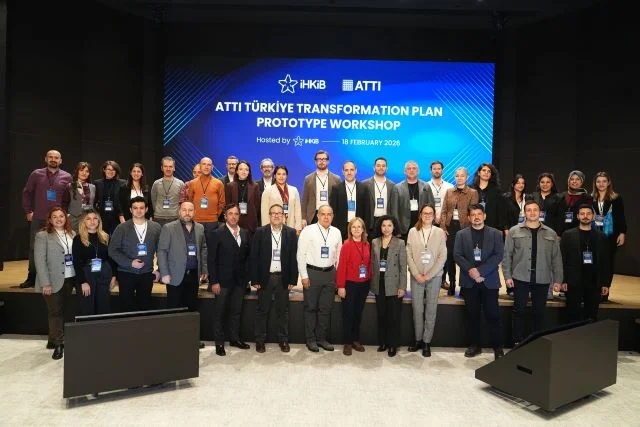
The Apparel and Textile Transformation Initiative (ATTI), in partnership with the Istanbul Apparel Exporters Association (IHKIB), has taken a significant step toward shaping the future of Türkiye’s apparel and textile industry by convening a high-level Transformation Plan Prototype Workshop in Istanbul.
The workshop, organized under ATTI’s pioneering Türkiye chapter and led by IHKIB, brought together manufacturers, global brands, federations and key industry stakeholders to align on a shared transformation roadmap. The gathering marked a key milestone in efforts to build a more resilient, competitive and sustainable Turkish textile and apparel sector.

Türkiye is one of the world’s leading apparel exporters, supplying major global brands across Europe and beyond. As regulatory requirements tighten in key export markets and sustainability expectations intensify, the sector faces mounting pressure to decarbonize operations, reduce water use and strengthen environmental compliance. Industry leaders say coordinated action is now essential to safeguard long-term competitiveness.
The ATTI Türkiye Transformation Plan is designed to provide a structured framework that aligns stakeholders across the value chain around measurable goals and time-bound commitments. Rather than relying on fragmented, company-level initiatives, the approach emphasizes collective action and sector-wide alignment.
The Istanbul workshop gathered representatives from some of Türkiye’s leading manufacturers, including Aster Textile, BOSSA, Botaş Nehir Tekstil AŞ., ISKO™, Kivanc Tekstil, Saide Group, Tepar Tekstil, TYH Tekstil A.Ş., Yeşim Group and Uniteks Tekstil TİC A.Ş. Their participation underscored the industry’s willingness to engage in structured transformation planning.
Global brand representatives from BESTSELLER, H&M, Inditex, Primark, PVH Corp., Ralph Lauren and Varner also joined the discussions, reflecting the critical role buyers play in driving sustainability standards across supply chains.
Together, participants worked to define a shared vision across three priority impact areas: energy, water consumption and wastewater treatment. These focus areas were identified as essential pillars in strengthening environmental performance while ensuring operational resilience.
Energy transition was highlighted as a key priority, particularly in accelerating renewable energy adoption and improving energy efficiency across manufacturing facilities. With global brands increasingly setting science-based climate targets, Turkish suppliers are under pressure to align emissions reductions with international benchmarks.
Water consumption and wastewater treatment were also central to discussions. Textile manufacturing is water-intensive, and improving water stewardship practices is critical in addressing both environmental and regulatory risks. Stakeholders explored pathways for scaling best practices, investing in modern treatment infrastructure and setting measurable reduction targets.
Participants emphasized that achieving meaningful transformation will require close coordination between manufacturers, brands, federations and industry associations. Trade bodies such as IHKIB were recognized for their pivotal role in convening stakeholders, facilitating dialogue and translating strategy into practical implementation frameworks.
The workshop also served as a platform for aligning expectations between brands and suppliers. As sustainability requirements evolve, clearer communication and shared accountability are becoming increasingly important. Industry representatives noted that transformation efforts must be commercially viable and supported by long-term sourcing commitments.
Also read: Bangladesh Announces 7th Sustainable Apparel Forum 2026 in Dhaka
Under IHKIB’s leadership, Türkiye’s apparel and textile industry is positioning itself to take proactive steps toward sector-wide sustainability transformation. By establishing a prototype plan with defined priorities and structured collaboration, the initiative aims to move beyond ambition toward concrete, time-bound action.
Organizers described the Istanbul meeting as an important prototype phase in refining the transformation roadmap. Further consultations and next steps are expected in the coming weeks as stakeholders work to formalize commitments and establish implementation mechanisms.
As global apparel supply chains face increasing scrutiny from regulators, investors and consumers, Türkiye’s collaborative approach signals a growing recognition that resilience and sustainability are inseparable from competitiveness.
With strong participation from both domestic manufacturers and international brands, the ATTI Türkiye Transformation Plan workshop highlights the country’s ambition to strengthen its sustainability leadership while reinforcing its position as a strategic sourcing hub in the global apparel market.
Industry leaders say the success of the initiative will depend on sustained engagement, transparent monitoring and continued collaboration across the value chain.
The Istanbul workshop represents not just a dialogue, but the foundation of a coordinated effort to future-proof one of the world’s most important textile and apparel production centers.