
Last week, to gather my thoughts ahead of the event, I did a little research, crunched a few numbers, remembered a few industry conversations, and wrote down some broad findings, which I have incorporated into this article …
Bangladesh is one of the world’s largest exporters of apparel, running neck-and-neck with China and Vietnam. Its industry is built on cost discipline, scale, and steady compliance upgrades. Which is great, but now that position is tested by a tight mix of cost, energy, and policy shocks that compress margins and shorten planning horizons. The short-run problem set is mostly macro and immediate: higher unit labor costs, unreliable utilities, and potential tariff shifts in key export markets, like the U.S.
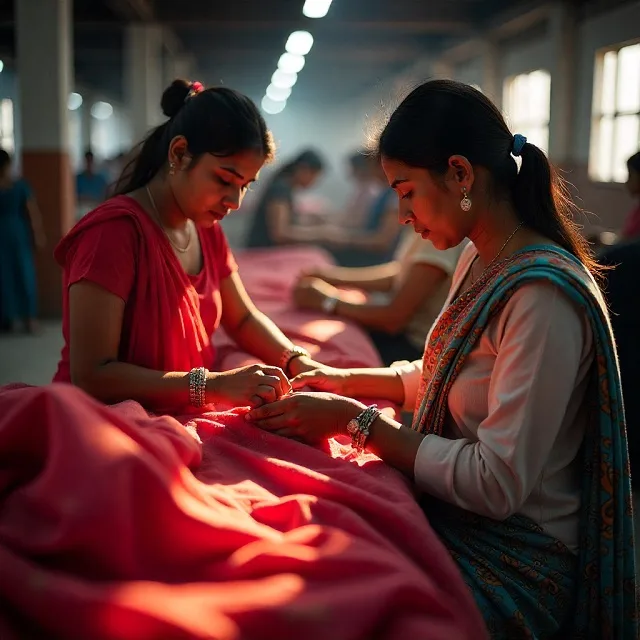
Wages are the first squeeze. The statutory minimum for garment workers rose from BDT 8,000 to BDT 12,500 per month in late 2023. The change was overdue relative to living costs. Still, for factories selling commodity basics on thin margins, it raised unit labor costs without a matching lift in buyers’ FOB offers. The math is simple: if price doesn’t move while payroll does, cash gets tight.
Also Read: When Will apparel Prices Really Start Rising?
Buyer behavior hasn’t helped. Brand price data and trade statistics show sustained pressure on realized prices versus competitors, and “open costing” practices further narrow supplier markups. Layer that on top of an uncertain tariff environment, elevated interest rates, and cautious order calendars, and managing working capital becomes more complicated. The result is less room for capex and less tolerance for any operational misstep.
Energy Reliability and Delivery Risk
Energy instability compounds the margin equation. Since 2022, intermittent gas shortages and routine load-shedding have forced mills to run diesel gensets and reschedule wet processing. Those workarounds raise variable costs and introduce timing risk on processes that are already schedule-sensitive.
This isn’t a one-off nuisance; it’s a structural reliability problem. Multiple hours of daily outages disrupt dyeing, finishing, and compliance-critical effluent treatment, and they ripple through production planning. Every hour of uncertainty adds buffer time, pushes overtime, or shifts loads to more expensive fuels.
The commercial outcome is predictable: a cost-risk spiral with higher per-unit energy costs and a greater probability of late shipments. Some buyers diversify orders to hedge, even if Bangladesh remains competitive on paper. Through 2024–2025, the pattern has been evident in industry reports documenting production losses tied to three- to four-hour outages. Reliability, not just rate, is the binding constraint.
Market Access After 2026
Policy is the next headwind. Bangladesh will graduate from Least Developed Country status in 2026. Graduation is a milestone, but in the European Union, it jeopardizes duty-free access unless the country qualifies for GSP+. Reverting to Standard GSP would move average apparel tariffs from 0% to low double digits, eroding price competitiveness in the EU, Bangladesh’s largest market.
Even with GSP+, proposed safeguards could limit benefits once export shares exceed thresholds. Indeed, for a scale industry, that kind of ceiling is material, as it creates uncertainty in medium-term investment plans for synthetic fiber capacity, finishing, and logistics upgrades that depend on predictable returns.
Also Read: Inside Fashion Debuts: Rethinking Bangladesh RMG Through ‘Value Over Volume’
The takeaway is straightforward: the tariff regime that actually applies post-2026 will shape sourcing math, category mix, and capex sequencing. Clarity — sooner rather than later — matters as much as the nominal rate because it sets the rules for multi-year commitments.
Input Dependence and the Synthetic Fiber Gap
Supply structure is another constraint. Knitwear has stronger backward linkages, but woven fabrics and synthetic fiber inputs remain heavily import-reliant, much of it from China. That concentration exposes the company to currency swings, freight disruptions, and geopolitical friction. It also slows response on synthetic fiber-heavy categories where global demand is growing fastest.
Policy steps to cut duties on selected synthetic fiber inputs are helpful, but they don’t substitute for domestic capability. What’s needed is capacity for spinning, texturizing, dyeing, and finishing that meets the requirements of major brands’ restricted-substance lists. Without that, the country leaves value on the table and stays stuck in lower-priced basics.
Building this base is not just a capex question; it’s a utilities and compliance question. Wet processing needs stable power, water, and effluent management. Until those are reliable at scale, factories will hesitate to commit to higher-mix synthetic fiber programs that punish delays.
Logistics and Delivery Variance
Physical movement remains a vulnerability. The ecosystem remains sensitive to one-off shocks — political unrest, floods that disrupt cotton flows, or the October 19 fire at Dhaka airport’s cargo complex, which disrupted the movement of materials and samples during the peak season. These events create variance that is expensive to insure against.
Port congestion has eased from crisis levels, but predictability is not yet a given. For higher-mix programs with tight calendars, variance matters more than averages. A day lost in transit can cancel a week of margin if it triggers airfreight or markdowns.
Long-run relief depends on large projects reaching completion and integrating well with inland logistics. Until then, lead-time buffers and carrying costs remain part of the delivered price, even when ocean rates look competitive.
Where the Upside Lives: Moving Up the Value Curve
The opportunity set is structural and meaningful. First, Bangladesh can climb the value ladder by scaling up synthetic fiber and performance categories — sportswear, outerwear, lingerie, and technical casual — where unit values and switching costs are higher. Global product mix is tilting toward synthetic fiber; aligning capacity with that demand raises average selling prices and reduces price volatility.
Second, sustainability credentials are a genuine asset. Bangladesh leads the world in the number of LEED-certified garment facilities and surpassed 200 certified plants by early 2024, with continued growth through 2025. In a world of EU due diligence rules and eco-design requirements, verified cuts in energy and water intensity, along with transparent effluent treatment, lower compliance risk for brands. That reduces transaction costs across audits, customs holds, and product-level disclosures.
Third, logistics investments can shrink lead-time risk. The World Bank’s financing for the Bay Terminal in Chattogram should expand capacity, reduce turnaround times, and accommodate larger vessels. Paired with the Matarbari deep-sea port moving toward limited operations later this decade, Bangladesh can reduce reliance on transshipment hubs and trim routing variability. The gains will be gradual but cumulative.
Circularity as Supply Security
Textile waste is both a challenge and a resource. Bangladesh generates substantial volumes but recycles only a fraction domestically. Building mechanical and chemical recycling capacity can substitute for imported fiber and synthetic fiber inputs, improving the balance of payments while meeting rising buyer requirements for recycled content under EU policy.
The economics are better when waste flows are formalized. Stable feedstock quality and predictable volume allow processors to invest in equipment that meets brand standards. Over time, that turns waste into a dependable input rather than a by-product to manage.
Done well, circularity also becomes a delivery advantage. Local recycled inputs mean shorter supply lines, fewer customs touchpoints, and less currency risk. That combination speaks directly to buyers who price certainty alongside cost.
What Will Decide the Next Few Years
The near-term picture is a squeeze: higher labor costs, unreliable energy, and tariff uncertainty. None of these is trivial, and together they raise costs and make successful execution more difficult. Factories will need tighter working-capital discipline, sharper line-level costing, and more explicit go/no-go criteria for orders that don’t cover the full risk-adjusted cost.
The medium-term picture is more favorable if investment matches strategy. Synthetic fiber capability, verifiable sustainability, better ports, and circular inputs are not slogans; they are profit levers when they move from slide decks to factory throughput. Each reduces dependence on a single variable — one tariff line, one fuel, one port — and each nudges the mix toward higher value.
Bangladesh’s impressive apparel export ranking will not be protected by history. It will be protected by how quickly the industry converts these structural opportunities into consistent delivery across categories with higher unit values and lower variance. That is the path from a cost-based edge to a resilience-based edge, and the basis for defending share in the next cycle.
About the Author

Robert Antoshak, Vice President of Global Strategic Sourcing & Development at Grey Matter Concepts, brings over 30 years of experience in the textile and apparel sector. He has advised governments, led consulting projects worldwide, and written extensively on global trade, sustainability, and sourcing. Previously a Partner at Gherzi Textil Organisation, he continues to shape industry perspectives through his articles and thought leadership.
Antoshak is a regular contributor to just-style.com and sourcingjournal.com.