
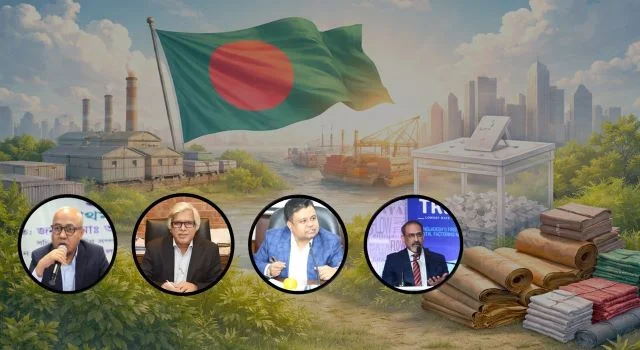
As the 13th parliamentary elections are set to be held on February 12, 2026, the business community is expressing clear expectations that go beyond the traditional campaign promises. Political unrest after the 2024 uprising and the caretaker government led by Nobel laureate Professor Dr. Muhammad Yunus have weakened business confidence, even as reforms continue. Ongoing uncertainty has slowed trade, investment, and industrial activity, especially in key sectors like textiles and clothing.
Business leaders across the country are urging political parties to present clear, practical election manifestos based on transparent policies and realistic plans to fix Bangladesh’s economic challenges. They argue that no amount of general promises can substitute for clear strategies that stabilize the investment climate, revitalize key industries and protect jobs.

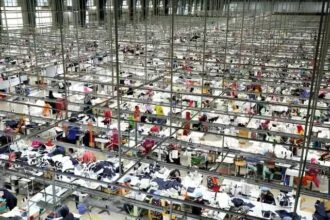
The readymade garment (RMG) and textile sector is at the center of this concern. As Bangladesh’s main export industry, it is facing serious difficulties. Gas shortages have cut production at many factories to just 30–40 percent, export growth has slowed, and pressure from global markets continues to rise.
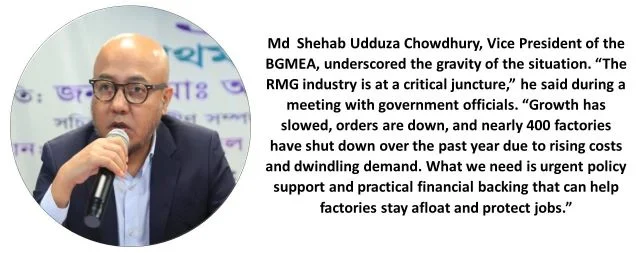
Chowdhury pointed out that the election period itself threatens productivity, as public holidays and the electoral calendar are expected to reduce working days in February and March sharply. He urged the next government to swiftly disburse pending cash incentives and provide low-cost loans to ensure factories can meet wage obligations during this lean period.
Bangladesh’s export earnings, and any downturn affects not only factories but also millions of workers across the supply chain. With global buyers taking a cautious “wait and see” approach due to political uncertainty and overseas tariff pressures, business leaders say the next government must act quickly and decisively to restore investor confidence.
Industry leaders also emphasize that macroeconomic stability and policy continuity are critical to managing both external and internal shocks. High inflation, exchange rate volatility, complex regulations, and frequent changes in tax policy have weakened the business environment. As a result, there are growing calls for structural reforms to simplify compliance, strengthen institutions, and ensure consistent policy implementation.
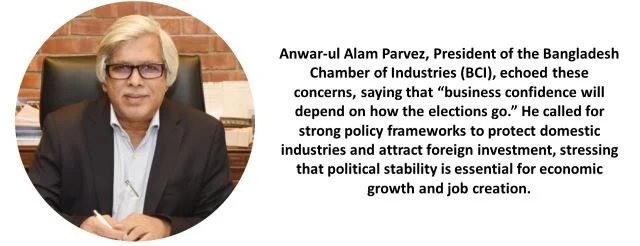
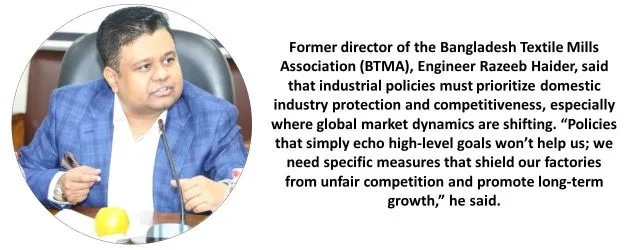
Beyond garments, the Bangladesh Textile Mills Association (BTMA), which represents yarn and fabric producers, is also calling for stronger industrial support. BTMA leaders say the sector needs protection from unfair global competition, along with better manufacturing incentives, simpler regulations, and improved logistics to revive production and attract long-term investment. Although BTMA’s current leadership was elected before the election cycle, its views continue to shape industry discussions on what the next parliament must address to sustain growth.
Also read: Bangladesh Garment Industry Seeks Urgent Government Aid
Industry concerns extend well beyond textiles. The leather and footwear sector is Bangladesh’s second-largest export earner after RMG also has clear expectations from political leaders. Manufacturers and exporters see the upcoming election as a chance to strengthen export competitiveness and push for structural reforms, particularly in areas such as international certification, supply-chain compliance, and preparation for the post-Least Developed Country (LDC) graduation period, when duty-free market access will decline.
Industry leaders warn that without clear government support for certification, quality improvement, and market access, the sector risks losing competitiveness to regional rivals. They are urging stronger government engagement to help the industry reach its full potential as a key source of jobs and export diversification.
Senior vice chairman of the Bangladesh Tanners Association (BTA), emphasized the need for investment in compliance, waste management, and technological upgrades so that these industries can compete on international standards and attract foreign buyers.
Industry leaders say elections will only drive growth if they are matched by macroeconomic stability, consistent fiscal policies, and a lower cost of doing business. Red tape, unclear regulations, and logistics bottlenecks continue to hold back exports and discourage foreign investment. Business groups point out that cutting these costs and ensuring predictable policies are top priorities for the private sector.
Beyond sector-specific concerns, many business representatives stress the importance of the rule of law, democratic governance, and strong institutions to rebuild confidence. They argue that political stability and transparent governance would encourage both local and foreign companies to invest, expand, and create jobs, especially important after years of political uncertainty.
For textile mill owners, leather exporters, and manufacturing executives, the upcoming election carries major economic implications. More than a change in leadership, it has become a test of economic direction and policy clarity. Business leaders want party manifestos to commit to practical reforms, clear accountability, and measurable implementation targets rather than broad promises.
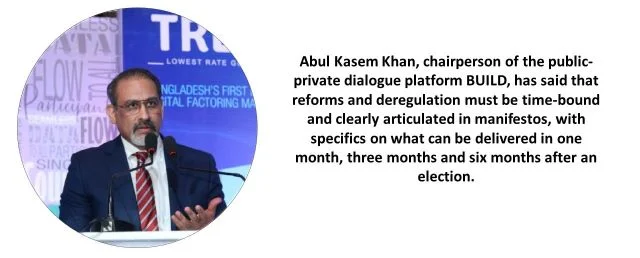
Experts also note that the next government’s success will depend on how effectively it addresses long-standing challenges in banking, logistics, energy, and labor markets. Strong commitments in these areas could determine whether the election sparks renewed growth or extends the current slowdown.
As voters prepare to go to the polls, the business community’s message is clear: economic credibility matters as much as political victory. Companies are ready to support growth and job creation, but they expect decisive leadership, workable solutions, and a genuine partnership between government and the private sector. The next leadership will be judged not only on promises made before February 12, but on whether it delivers a realistic roadmap for economic resilience and sustainable development.
This report is based on opinions collected from various national and international media, industry associations, and business leaders from the textile, garments, leather, and manufacturing sectors, reflecting the overall expectations of the business community ahead of the election.
- https://en.ittefaq.com.bd/11781/gas-crisis-hits-bangladesh-s-70bn-textile-and-rmg?utm
- https://www.thedailystar.net/news/what-businesses-expect-the-2026-election-4085221
- https://www.jagonews24.com/m/economy/news/1089226
- https://www.tbsnews.net/economy/january-sees-1122-month-month-export-growth-trade-improves-1350511
- http://reddit.com/r/BangladeshMedia/comments/1pk3tg8/businesses_will_depend_on_how_the_elections_go
- https://www.bssnews.net/