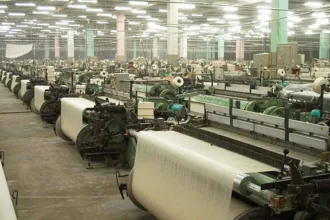

Bangladesh is considering scrapping preferential corporate tax rates for its powerful ready-made garment sector from the next fiscal year, officials said, in a move aimed at boosting revenue but raising fresh concerns over export competitiveness.
The National Board of Revenue (NBR) has indicated that reduced tax rates of 10% for green factories and 12% for other garment exporters may not continue beyond fiscal year 2025–26, signalling a shift toward a more uniform corporate tax regime.

“We are reviewing the continuation of these benefits. Such reduced rates may not remain in the future,” NBR Chairman Md Abdur Rahman Khan said during pre-budget consultations with business leaders.
The proposal would bring the sector closer to the standard corporate tax rate of around 25%–27%, marking one of the most significant policy changes for an industry that accounts for more than 80% of Bangladesh’s export earnings.
Also Read: Oil Price Surge Pushes Textile Industry Toward Bio-Based Fibers
The move comes as the government faces mounting pressure to raise tax collection under an ongoing reform programme backed by the International Monetary Fund, while reducing widespread exemptions that analysts say distort the tax structure.
According to policy discussions, tax incentives across export-oriented sectors — including garments, textiles and footwear — could be gradually phased out as authorities attempt to streamline the system and improve compliance.
Industry leaders, however, warned that withdrawing the benefits too quickly could undermine Bangladesh’s competitiveness at a time when global demand remains fragile and costs are rising.
“If the tax burden suddenly doubles, it will directly impact profitability and pricing,” said a senior official at the Bangladesh Garment Manufacturers and Exporters Association. “Our competitors are still offering incentives. This is not the right time to remove support.”
Exporters are already grappling with slowing orders and shifting sourcing patterns, with recent data showing Bangladesh losing ground in key markets such as the United States to regional rivals.
Business groups also cautioned that abrupt policy shifts could dampen investor confidence, particularly as Bangladesh prepares for its graduation from least developed country (LDC) status in 2026 — a transition expected to reduce trade privileges in major markets.
Economists say the government faces a delicate balancing act between fiscal consolidation and export stability.
“Rationalising tax exemptions is necessary, but it should be gradual and predictable,” said a Dhaka-based economist. “A sudden withdrawal could create shocks for an industry that remains the backbone of the economy.”
The NBR has yet to finalise its proposals, which are expected to be outlined in the upcoming national budget. Officials indicated that consultations with stakeholders are ongoing, leaving room for a phased or partial adjustment rather than an immediate rollback.
For now, the signal from policymakers is clear: Bangladesh is moving toward a more uniform, revenue-driven tax regime — but how it manages the transition could shape the future of its export engine.