

Business leaders, policymakers, and development partners have called on the government to urgently operationalise the National Logistics Policy 2025, warning that inefficiencies in Bangladesh’s logistics ecosystem could constrain trade expansion, export diversification, and long-term economic growth.
The appeal was made at a focus group discussion (FGD) titled “Framing the Logistics Sector Landscape: Challenges, Opportunities, and the Way Forward”, organised by the American Chamber of Commerce in Bangladesh (AmCham) at a city hotel on Tuesday.

The discussion brought together stakeholders from the readymade garment (RMG) sector, freight forwarding, inland container depots, shipping lines, airlines, courier services, financial institutions, and development agencies.
Calling logistics a foundational pillar of modern economies, Syed Ershad Ahmed, President of AmCham Bangladesh, said efficient logistics systems are critical for sustaining supply chains, supporting economic growth, and ensuring the continuity of everyday life.
“While Bangladesh’s logistics sector has evolved over the years, it continues to lag behind regional competitors and remains poorly understood domestically,” he said, drawing on over three decades of professional experience.
He noted that the global logistics landscape is being rapidly reshaped by artificial intelligence and automation, decarbonisation and fuel transitions, geopolitics, regionalisation, and supply chain resilience, stressing that Bangladesh must urgently bridge existing knowledge, infrastructure, and capacity gaps to support growing trade and investment flows.
Also Read : Bangladesh Garment Industry Seeks Urgent Government Aid
M Masrur Reaz, Chairman of Policy Exchange Bangladesh, highlighted logistics as a key determinant of trade competitiveness through cost reduction, faster delivery, and efficiency gains.
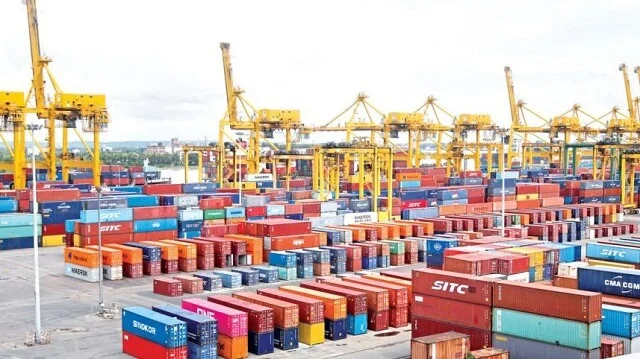
Referring to the recent Chattogram port labour strike, he said logistics disruptions can severely affect the national economy, disrupting exports, imports, and industrial supply chains.
He noted that logistics infrastructure development and port capacity expansion will be essential to support Bangladesh’s projected GDP of USD 760 billion by 2030.
Importantly, he pointed out that a 1% reduction in logistics costs could increase exports by approximately 7%, a crucial advantage as the country prepares for graduation from the Least Developed Country (LDC) category.
However, he identified significant implementation gaps in the National Logistics Policy, including government monopolies in rail and air cargo services, weak inter-ministerial coordination, and the absence of a central logistics authority to oversee reforms.
Seasoned entrepreneur Mahbubul Anam, Managing Director of CF Global, outlined major challenges in air logistics and express courier operations, particularly for time-sensitive shipments.
He said logistics costs at Dhaka airport are 20–25% higher than road transport, reducing competitiveness for exporters and e-commerce operators.
He stressed the need for cost rationalisation, capacity expansion, adequate equipment, efficient courier services, and robust contingency planning, especially as e-commerce-driven demand for express logistics continues to rise.
He also emphasised stronger public–private coordination and stakeholder-informed infrastructure planning to address persistent bottlenecks.
Nusrat Nahid Babi, Senior Transport Specialist for South Asia at the World Bank, said Bangladesh’s logistics reform momentum since 2022 must be reaffirmed by the new government through clear priorities and high-level political consensus.
She outlined a phased reform agenda built around five thematic pillars : Policy and procedural simplification, Multimodal logistics infrastructure and connectivity, Skills and institutional capacity development, Supply-chain digitalization, Investment in logistics
She stressed that without coordinated execution, policy ambitions would fail to translate into real efficiency gains.
Also Read : Aditya Birla Lifestyle Brands – Q3 FY26 Key Metrics
From the financial sector perspective, Md Moinul Huq, Citi Country Officer of Citibank N.A. Bangladesh, highlighted the urgent need for customs authorities to operationalise provisions of the Customs Act 2023.
He said clear guidelines on electronic document submission and digital payment modalities are essential to reduce clearance delays, improve transparency, and align Bangladesh with global trade practices.
Participants expressed concern over Bangladesh’s heavy dependence on RMG exports, slow progress in new infrastructure development, and poor implementation of electronic documentation systems despite enabling policies being in place.
Officials from the US Embassy in Dhaka, including Commercial Counsellor Paul Frost and Agricultural Attaché Erin Covert, also attended the session, reflecting growing international interest in Bangladesh’s logistics reform agenda.
The discussion concluded with a strong consensus that Bangladesh must now move decisively from policy intent to implementation, supported by a clear execution roadmap, institutional reforms, and sustained collaboration between the public and private sectors to unlock the full potential of its logistics industry.