
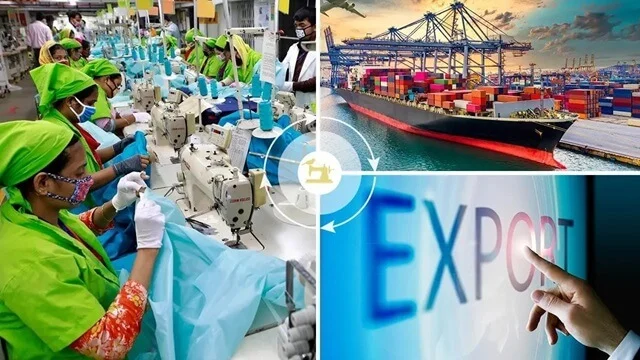
Bangladesh’s ready-made garment sector—its economic backbone—could soon face a new layer of trade pressure in its most important market, as climate policy begins to reshape global commerce. A recent study warns that exports to the European Union may incur an additional carbon-related levy of roughly 5% by 2030 if the industry does not significantly cut emissions.
This potential cost increase is linked to the EU’s Carbon Border Adjustment Mechanism, a policy designed to ensure that imported goods carry a carbon cost comparable to products manufactured within Europe.

Although the system will initially target sectors such as cement, steel, and fertilizers from 2026, policymakers have signaled that it is likely to expand to include textiles and apparel within the decade.
For Bangladesh, where garments account for more than 80% of total exports and the EU absorbs over half of that volume, the implications are substantial.The research, conducted by Mustafizur Rahman of the Centre for Policy Dialogue and Mohammad Imraj Kabir, estimates that under current emission levels, apparel shipments could face a carbon tax of approximately 4.8%.
This comes at a particularly sensitive time, as Bangladesh is set to graduate from least developed country status in November 2026. With that transition, the country will gradually lose duty-free and quota-free access to European markets, meaning exporters may already face an average tariff of about 12%.
When combined with a carbon adjustment, the total effective duty burden could approach 17%, potentially eroding Bangladesh’s price competitiveness against rivals like Vietnam or Turkey. The concern is not only about tariffs, but also about structural readiness.
Also Read : Mohammad Mofazzal Hosen Pabel Appointed Chief Advisor To BGBA
Much of Bangladesh’s garment production still relies heavily on fossil fuel-based energy, especially natural gas and grid electricity with limited renewable input. Without a shift toward cleaner production methods, the sector risks being penalized under emerging global climate regulations.
At the same time, European buyers are increasingly demanding traceability, low-carbon footprints, and compliance with sustainability benchmarks across supply chains. Industry leaders remain cautiously optimistic.
Mahmud Hasan Khan Babu of the Bangladesh Garment Manufacturers and Exporters Association (BGMEA) has highlighted that many factories are already transitioning toward greener operations.
Bangladesh currently hosts nearly 300 environmentally certified factories under the US Green Building Council, making it one of the global leaders in green garment manufacturing infrastructure.
Also Read : Dimpora’s PFAS‑Free Membranes Redefine Sustainable Outdoor Wear Technology
The report emphasizes that avoiding future penalties will depend on accelerated adoption of renewable energy, such as solar and wind, alongside improvements in energy efficiency and waste management.
It also calls for coordinated policy support, including tax incentives for green investments, easier access to finance for installing effluent treatment plants and energy-efficient machinery, and the possible introduction of a domestic carbon pricing mechanism to prepare industries for international standards.
Beyond the factory level, the issue reflects a broader shift in global trade dynamics where environmental performance is becoming as important as cost efficiency.
For Bangladesh, the challenge lies in balancing its role as a low-cost manufacturing hub with the urgent need to transition toward sustainable production. If managed well, this transition could not only help avoid future tariffs but also strengthen the country’s position in an increasingly climate-conscious global market.