

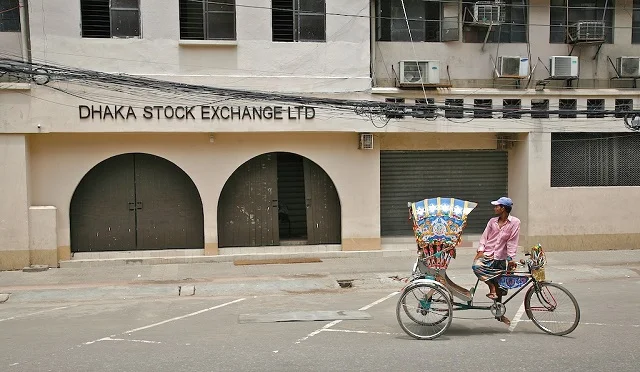
Stocks in Bangladesh fell on Sunday, snapping a four-day rally, as escalating geopolitical tensions in the Middle East dampened investor sentiment and triggered profit-taking across the market.
The benchmark DSEX of the Dhaka Stock Exchange dropped about 49 points, or nearly 1 percent, to close around 5,319, reversing gains made during the previous trading sessions when the market had recovered strongly.

Market turnover also declined, with daily transactions falling to roughly Tk523 crore, reflecting cautious trading as investors refrained from taking fresh positions amid global uncertainty.
Analysts said the decline largely reflected profit-booking after the recent rally, but concerns over the economic impact of the Middle East conflict also weighed on sentiment. Rising geopolitical tensions have heightened fears of potential disruptions in global energy markets and shipping routes, prompting investors to adopt a wait-and-see approach.
Also Read: Olympic Industries Signs Rooftop Solar EPC Deal With Solaric Group
Bangladesh’s stock market has experienced heightened volatility in recent weeks as the conflict pushed global oil prices higher and raised concerns about energy supply and import costs for energy-dependent economies.
Earlier this month, the benchmark index recorded one of its sharpest falls in years as geopolitical fears triggered panic selling among retail investors. The market later rebounded over several sessions as bargain hunters returned to pick up fundamentally strong stocks at lower valuations.
However, brokers say investor confidence remains fragile, with many participants closely monitoring developments in the Middle East and their potential impact on inflation, currency stability and corporate earnings in Bangladesh.
Market participants expect trading to remain volatile in the near term, as geopolitical risks and global commodity prices continue to influence investor sentiment in the country’s equity market.