

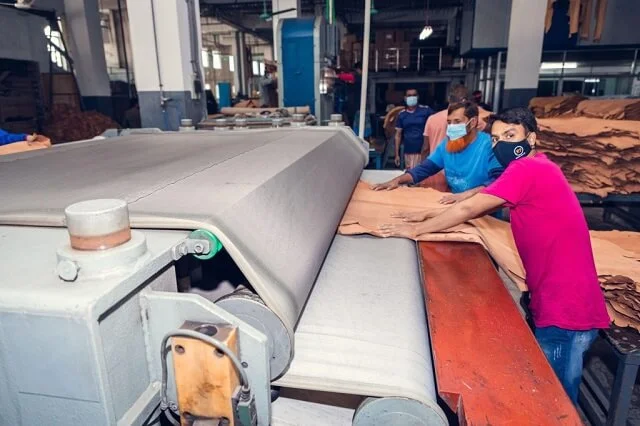
Bangladesh’s leather sector has called for sweeping tax reforms ahead of the FY27 national budget, urging authorities to withdraw duties and value-added tax on critical imported inputs to sustain export competitiveness.
Industry leaders, including the Bangladesh Tanners Association and the Bangladesh Finished Leather, Leathergoods and Footwear Exporters Association, made the proposal during pre-budget consultations with the National Board of Revenue. They argued that the current tax structure is placing significant pressure on manufacturers already grappling with rising global competition.

The associations have demanded full exemption from VAT and taxes on 43 categories of chemicals used in leather processing, alongside a reduction of import-stage VAT from 15% to 7.5%. They also called for the withdrawal of a recently imposed 3% source tax on raw leather, describing it as detrimental to a supply chain reliant on perishable inputs. Read Here
Bangladesh’s leather sector, widely regarded as the country’s second-largest export-earning industry after garments, depends heavily on imported chemicals and machinery. According to industry stakeholders, cumulative taxes—including customs duties, VAT, and advance income tax—can exceed 30%, significantly inflating production costs.
Also Read: Bangladesh Climbs U.S. Footwear Sourcing Ranks as China Share Slips
Tanners warn that such cost pressures are eroding Bangladesh’s competitiveness against regional peers like India, Vietnam and Indonesia, where input costs are comparatively lower due to more favorable fiscal policies. Exporters say this disadvantage is already reflected in slowing growth in higher-value leather goods and footwear shipments.
Beyond tax relief, industry representatives have also urged the government to ensure VAT exemptions on utilities such as electricity, water and fuel for export-oriented factories, a measure they say would align Bangladesh with international best practices.
Policy analysts note that the government faces a delicate balancing act. While tax reductions could stimulate export growth and formalize supply chains, they may also reduce short-term revenue collection at a time when Bangladesh is under pressure to expand its tax base.
However, industry leaders argue that easing the fiscal burden would ultimately boost export volumes, improve compliance, and generate higher long-term revenue through sectoral expansion. With the FY27 budget approaching, the government’s response to these demands is expected to signal its broader strategy for strengthening non-apparel export sectors.
The leather industry’s appeal comes at a critical time as Bangladesh seeks to diversify exports and reduce reliance on its ready-made garment sector, positioning leather and footwear as key drivers of future growth.