
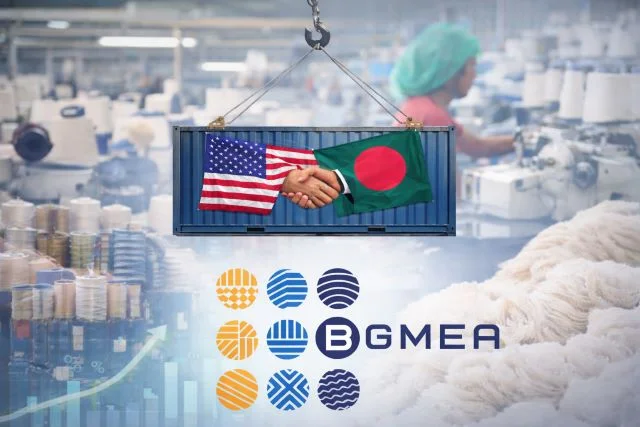
Bangladesh’s powerful garment industry body welcomed a newly signed tariff agreement between Bangladesh and the United States, saying the deal could improve market access for apparel exports but stressing the need for clarity on its full terms and conditions.
The Bangladesh Garment Manufacturers and Exporters Association (BGMEA) said the agreement, concluded after nine months of negotiations, marks an important step in strengthening trade ties between the two countries. The United States is Bangladesh’s single largest export destination for garments, accounting for billions of dollars in annual shipments.

In an initial response, BGMEA expressed appreciation to the US government and Bangladesh’s interim leadership for their role in finalising the agreement. The association specifically thanked Chief Adviser Dr Muhammad Yunus, National Security Adviser Khalilur Rahman, Commerce Adviser Sheikh Bashir Uddin and Commerce Secretary Mahbubur Rahman, as well as the US Embassy in Dhaka and the Office of the United States Trade Representative (USTR), for facilitating the talks.
Based on preliminary information available to the industry body, the agreement reduces the reciprocal tariff imposed by Washington on Bangladeshi products from 20% to 19%. More significantly for the apparel sector, garments produced using cotton and man-made fibres imported from the United States will be exempt from the reciprocal tariff altogether.
Also read: Bangladesh Gets Duty-Free US Access for Cotton-Based Garments
BGMEA said this provision could create fresh opportunities for Bangladeshi exporters by encouraging greater use of US-origin raw materials and improving the competitiveness of certain product categories in the American market.
“We believe this will further enhance Bangladesh’s access to the US market,” BGMEA said in a statement, while noting that effective implementation will depend on proper valuation and traceability of US-origin cotton and fibres used in garment production.
The United States is one of the world’s largest cotton producers, and Bangladesh is a major importer of cotton for its export-oriented textile and apparel industry. However, industry representatives caution that US cotton is generally higher priced than alternatives sourced from other markets, raising questions about cost competitiveness.
According to BGMEA, meaningful gains from the tariff exemption will depend on whether local spinning mills can offer yarn made from US cotton at competitive prices. Without that, garment manufacturers may struggle to absorb higher input costs, particularly at a time when global fashion brands continue to push for lower prices amid weak consumer demand.
Bangladesh is the world’s second-largest exporter of apparel after China, with the sector accounting for more than 80% of the country’s export earnings and employing around four million workers. The US market is especially important for Bangladesh as it seeks to defend its market share against regional competitors such as India and Vietnam.
Trade analysts say even a one-percentage-point tariff reduction, combined with targeted exemptions, could influence sourcing decisions by major US brands, particularly for products where margins are tight.
However, BGMEA said it has yet to receive formal documentation outlining the complete scope, conditions and implementation timeline of the agreement. The association said it would seek urgent clarification once official details are shared by the government.
“BGMEA has not yet been formally informed of the complete terms and conditions of the agreement,” the statement said. “Upon receiving detailed documentation, BGMEA will convene an urgent meeting with its members and engage in discussions with the US Embassy in Dhaka and the USTR to determine the next course of action.”
Industry sources say key issues likely to be examined include rules of origin requirements, certification and traceability mechanisms for US cotton and fibres, and whether any quotas or volume limits will apply to tariff-free garment exports.
The agreement comes at a politically sensitive time for Bangladesh, which is governed by an interim administration following months of unrest and is preparing for national elections. Securing improved access to the US market is seen as critical for stabilising export earnings and investor confidence.
For Washington, the deal aligns with broader efforts to encourage the use of US-made inputs in global supply chains while recalibrating tariff regimes imposed under earlier trade measures. By linking tariff exemptions to the use of American raw materials, the agreement could support US cotton growers and man-made fibre producers while reshaping sourcing patterns in the apparel industry.