
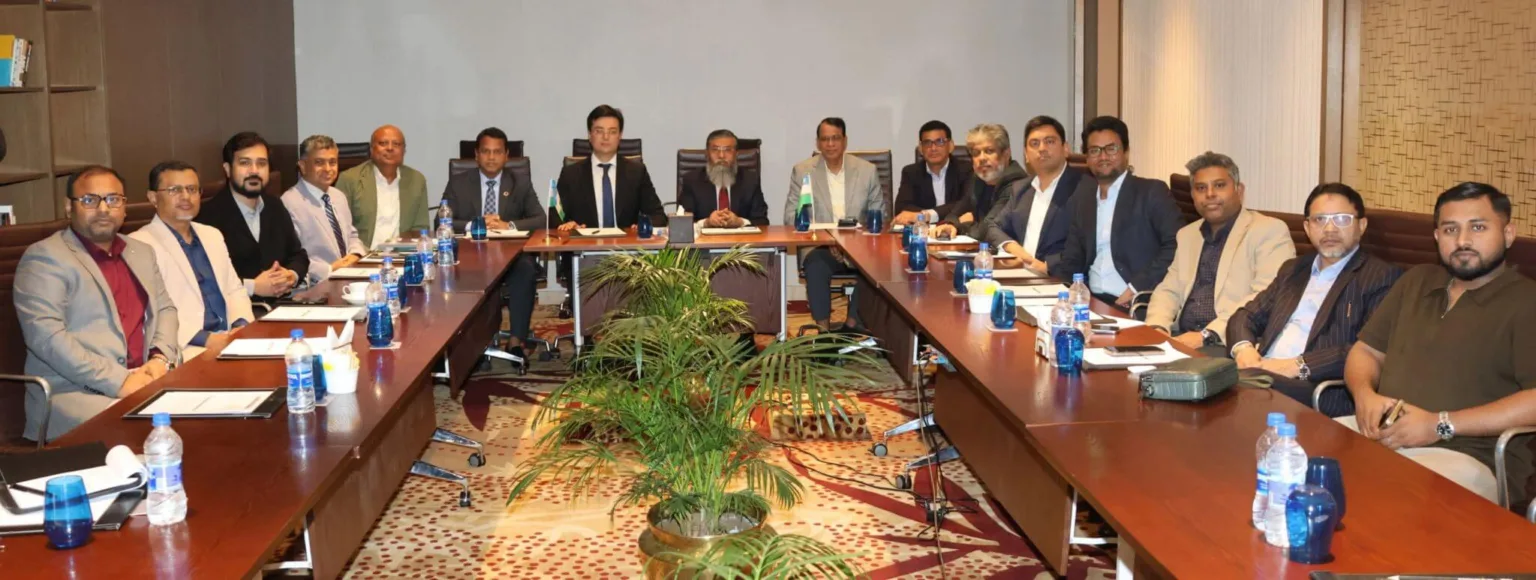
In a significant step toward building deeper economic and textile-sector cooperation between Bangladesh and Uzbekistan, the Bangladesh Knitwear Manufacturers and Exporters Association (BKMEA) hosted a high-level dinner in honor of H.E. Sardor Rustambaev, Ambassador of the Republic of Uzbekistan to India.
The event was held at Sheraton Dhaka on 25 November and brought together an influential gathering of policymakers, business leaders, industry stakeholders, and representatives from both countries’ textile value chains.

BKMEA President Mohammad Hatem warmly welcomed Ambassador Rustambaev, officially opening a dialogue aimed at expanding bilateral trade, strengthening sectoral collaboration, and exploring new investment avenues.
Also Read: Hohenstein and BGMEA Collaborate to Boost Sustainability in Bangladesh’s RMG
The presence of top industry leaders—including key figures from BKMEA, Bangladesh Bank, FBCCI, DCCI, the Bangladesh RMG Center, Uztextileprom’s advisory team in Bangladesh, and leaders from the pharmaceutical and broader business community—underlined the strategic importance of the meeting.
During the program, BKMEA Vice President Mohammad Rashed delivered a focused presentation on the current export–import scenario between Bangladesh and Uzbekistan. He highlighted the growing potential for mutual trade, identified existing challenges, and stressed the importance of smoother cross-border trading procedures.
His remarks emphasized that both countries stand to benefit significantly if logistics, regulatory barriers, and connectivity are improved.
BKMEA President Mohammad Hatem described Uzbekistan as an increasingly attractive business destination for Bangladeshi entrepreneurs. Pointing to the Central Asian nation’s rapid industrial transformation, he urged the ambassador to take concrete steps toward establishing a full-fledged Uzbekistan Embassy in Dhaka, which he believes would enhance diplomatic engagement and accelerate business ties.
Hatem also called for reopening direct air connectivity between the two countries, noting that ease of travel would further promote trade, investment, and knowledge exchange between textile players on both sides.
He reaffirmed BKMEA’s readiness to support all forms of cooperation—from trade facilitation and skills development to value-chain collaboration and joint ventures. Hatem also encouraged Uzbek investors to explore opportunities in Bangladesh’s diversified manufacturing sectors, stressing that Bangladesh remains one of the most attractive destinations for foreign investment due to its competitive workforce, strategic location, and expanding industrial base.
Ambassador Sardor Rustambaev, in his keynote remarks, highlighted Uzbekistan’s position as one of the world’s leading cotton-producing nations. He explained that the country is rapidly transitioning from a traditional cotton exporter to a modern textile and apparel manufacturing hub.
Acknowledging Bangladesh’s global excellence in the apparel industry, he expressed keen interest in deeper collaboration and candidly noted that he “should have visited much earlier” to learn from Bangladesh’s experience, capabilities, and large-scale industrial efficiency.
The ambassador emphasized Uzbekistan’s vision to strengthen its textile expertise through advanced technology, skill development, and market expansion. He viewed Bangladesh as an ideal partner for this transformation, given its standing as the world’s second-largest apparel exporter and its decades of manufacturing expertise.
Uzbekistan’s textile sector has expanded rapidly in recent years. The country now processes almost all of its cotton domestically, producing yarn, fabric, knitwear, and finished garments for global markets. Foreign direct investment exceeding $120 billion in the past six years and a young population—over 60% under the age of 30—have accelerated this industrial growth.
Uzbekistan’s textile exports have soared, with increasing numbers of factories producing for European and global apparel brands. This makes Uzbekistan a promising upstream partner for Bangladesh’s vertically integrated RMG industry.
For Bangladesh, partnership with Uzbekistan offers opportunities for diversified sourcing of cotton, yarn, and fabrics; joint investment in textile clusters; and expansion into Central Asian and European markets through collaborative production.Uzbekistan contributes raw materials and expanding textile capacity, while Bangladesh brings extensive apparel expertise, compliance standards, design capabilities, and global market reach.
The high-level dinner was attended by Deputy Governor of Bangladesh Bank Md. Habibur Rahman; First Secretary of the High Commission of Uzbekistan Abdul Aziz; FBCCI Administrator Md. Abdur Rahim Khan; DCCI President Taskeen Ahmed; President of Bangladesh RMG Center and Uztextileprom Advisor in Bangladesh Mr. Mehdi Mahbub; BKMEA Senior Vice President Amal Podder; Vice President (Finance) Md. Morshed Sarwar; Vice President Md. Shamsuzzaman; Director Mohammad Zakaria Wahid; Imran Kader Turjo; Minhaz Hoque; Incepta Pharmaceuticals Executive Director (Marketing) Ehsan Aziz; BAYLA President Abrar Hossain Sayem; and 1st Vice President Hasin Arman Ayon, among others.
The event concluded with BKMEA leadership expressing their gratitude to Ambassador Rustambaev and reaffirming a strong commitment to strengthening bilateral ties. As both countries continue to explore trade, investment, and textile-sector cooperation, the Dhaka gathering is expected to serve as an important milestone in shaping a new era of Bangladesh–Uzbekistan partnership.