
Brazil has rapidly become one of the world’s most influential cotton producers, not just because of its scale but because of a production model built on rain-fed agriculture, advanced technology and rigorous sustainability systems. At a moment when global fashion faces pressure to decarbonise supply chains, reduce water use and ensure true traceability, Brazil’s cotton sector offers a blueprint for how large-scale production can align with environmental responsibility and high quality.
A Rain-Fed System that Saves Water and Strengthens Resilience

More than 90 percent of Brazilian cotton is grown entirely under a rain-fed system. Instead of relying on irrigation infrastructure, farms depend on natural rainfall—an approach made possible by the country’s favourable climate and deep agricultural expertise.
Also Read: Brazil Strengthens Grip on Global Cotton Market
This model drastically reduces water extraction, lowers energy consumption and limits pressure on local ecosystems. At a time when cotton production in many countries faces criticism for high water usage, Brazil’s rain-fed system positions its fibre as one of the most water-efficient options on the global market.
The system also supports soil health: paired with crop rotation, reduced tillage and integrated pest-management strategies, rain-fed cotton helps maintain long-term land productivity. Many farms grow cotton as a second crop after soybeans, improving land-use efficiency while avoiding expansion into new areas.
Technology Drives Productivity and Consistency
The sustainability benefits of rainfall alone would not be sufficient without strong technological investment. Brazilian producers have embraced precision agriculture tools, mechanised planting and harvesting, satellite monitoring and high-performance seed varieties designed for local climate conditions.
As a result, productivity has risen steadily over the past decade. Even under rain-fed conditions, Brazilian cotton fields achieve yields competitive with irrigated systems elsewhere. These gains reflect a data-driven approach: farmers use real-time field analytics, GPS-guided machinery and variable-rate input application to optimise each hectare.
Also Read: India’s Cotton Sector Transforming with New Regenerative Farming Drive
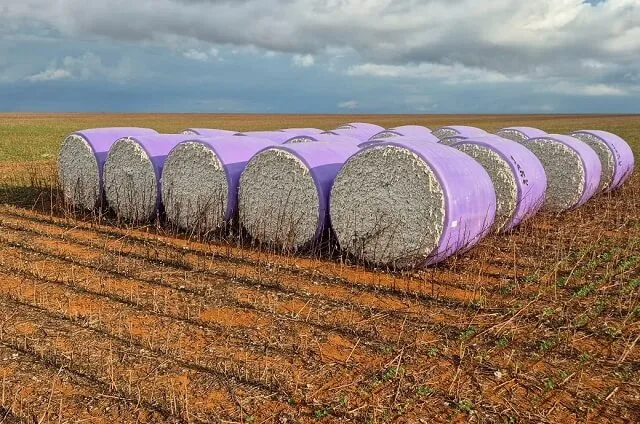
Mechanisation is nearly universal, ensuring consistent fibre quality and operational efficiency from soil preparation through to harvesting and baling.
HVI Testing and Full Traceability Set a Quality Benchmark
Quality assurance is central to Brazil’s cotton identity. Every bale undergoes High-Volume Instrument (HVI) testing, generating a complete dataset for fibre attributes such as strength, length, colour grade, micronaire and uniformity. These results are integrated into a national standardised classing system.
To support transparency, the country also operates a robust bale-level traceability system. Each bale is tracked from the farm through ginning and transportation, providing brands and spinners with verifiable origin, production data and sustainability credentials. Few cotton-producing regions offer traceability at this depth or scale.
This system enables buyers to confidently link physical quality to responsible production practices—an increasingly essential requirement across fashion supply chains.
Environmental and Social Standards Embedded into Production
Sustainability frameworks are deeply integrated into the sector. The Responsible Brazilian Cotton (ABR) programme and the international Better Cotton initiative both certify large portions of national output. Certification criteria include labour conditions, community engagement, biodiversity protection, safe chemical management and habitat preservation.
Producers invest in maintaining native vegetation areas within farms and protecting key biomes. Social programmes support local workers, provide training and strengthen rural communities surrounding cotton regions.
Combined with water conservation and emissions reductions gained through rain-fed farming, these efforts support a reputation for responsible large-scale production.
Meeting the Needs of the Global Fashion Industry
For global apparel brands navigating stricter environmental targets and supply-chain transparency demands, Brazilian cotton offers a strong value proposition. Buyers gain access to high-quality fibre, verifiable origin data and agricultural practices that minimise water use and protect ecosystems.
As fashion continues to align with science-based sustainability goals, materials produced under low-water, traceable and technologically advanced systems will become increasingly valuable. Brazil’s model shows that productivity and environmental stewardship can operate together at global scale.
A Model for the Future
Brazil’s cotton industry illustrates how innovation, climate advantage and responsible practices can reshape a commodity often criticised for its ecological footprint. By depending on rainfall rather than irrigation, adopting high-precision technologies and committing to certified production, the sector demonstrates that cotton can be both high-yield and environmentally aligned.
For a fashion industry seeking reliable, sustainable raw materials, Brazil’s rain-fed, technology-driven cotton system represents a forward-looking path—and a competitive differentiator likely to grow even more important in the decade ahead.