

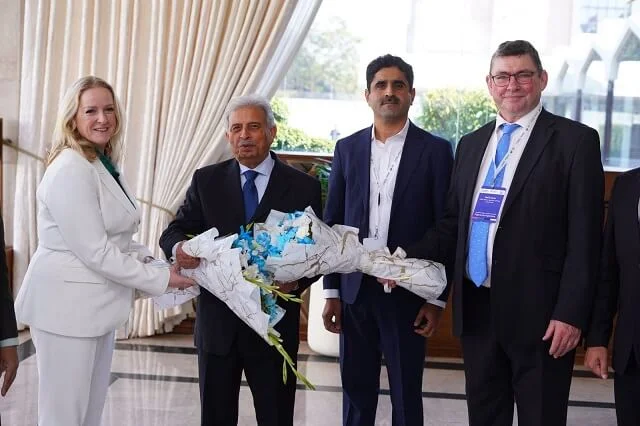
CottonConnect recently convened a high-level Regenerative Agriculture Roundtable titled “Strengthening Pakistan’s Cotton Sector through Regenerative Agriculture” in Islamabad on February 3, 2026, in collaboration with the All Pakistan Textile Mills Association (APTMA).
The event underscored the growing importance of sustainable and climate-resilient cotton production in strengthening Pakistan’s textile and apparel value chain.

The roundtable served as a strategic platform for dialogue and collaboration among key stakeholders across the cotton and textile ecosystem.
Discussions centered on advancing regenerative farming practices, enhancing cotton traceability, improving market access, and fostering effective public–private partnerships to support long-term sectoral growth.
The event was graced by Rana Tanveer Hussain, Federal Minister for National Food Security & Research, as the chief guest, highlighting the government’s commitment to sustainable agriculture and food security.
Kamran Arshad, Chairman of APTMA, delivered the welcome address, emphasising the textile industry’s role in supporting responsible cotton sourcing. Alison Ward, Chief Executive Officer of CottonConnect, delivered the keynote address, outlining CottonConnect’s vision for scaling regenerative agriculture and strengthening farmer livelihoods through inclusive and market-linked solutions.
Also Read : Bangladesh Brings 38 Exhibitors to Ambiente Frankfurt 2026
The roundtable concluded with closing remarks from Zeeshan Shabbir Rana, Chief Executive Officer of the Punjab Board of Investment and Trade, who highlighted the importance of investment-friendly policies and cross-sector collaboration in driving sustainable agricultural transformation.
Three focused panel discussions anchored the agenda, addressing policy frameworks, market requirements, and partnership priorities needed to accelerate the adoption of regenerative and traceable cotton systems in Pakistan.
Policymakers, industry leaders, global brands, and agricultural experts shared insights on aligning national policies with global sustainability expectations, meeting evolving buyer demands, and scaling impact through coordinated public private action.
The roundtable reinforced the critical role of regenerative agriculture in improving soil health, resilience to climate change, and farmer incomes, while positioning Pakistan as a reliable source of sustainably produced, traceable cotton for global markets.