

The long-awaited trade agreement between the European Union and the Mercosur bloc is set to enter provisional application on May 1, 2026, marking a pivotal step toward one of the world’s largest free trade zones and unlocking immediate tariff reductions across key industries.
The interim phase of the agreement—covering trade provisions—will allow both sides to begin implementing tariff cuts and market access commitments while the broader deal continues through a lengthy ratification process within EU institutions and member states. The move follows more than two decades of negotiations, positioning the pact as a cornerstone of Europe’s evolving global trade strategy.

Once in force, the agreement will cover over 90% of goods traded between the two regions, eliminating an estimated €4 billion in annual tariffs. European exporters are expected to gain significantly from the removal of steep duties in South American markets, particularly in sectors such as automotive, machinery, chemicals, wine, and dairy, where tariffs have historically ranged as high as 35%.
At the same time, Mercosur countries—comprising Argentina, Brazil, Uruguay and Paraguay—will benefit from improved access to the European market for agricultural goods, as well as industrial exports including textiles, apparel and footwear. The agreement also introduces tariff-rate quotas for sensitive products such as beef, sugar and ethanol, balancing trade liberalization with protections for domestic industries.
Also Read: Allbirds Sale Shocks Footwear World as American Exchange Pays $39 Million
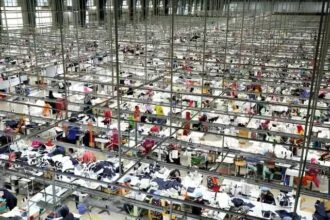
For the global textile and footwear sectors, the deal is expected to reshape sourcing dynamics. Lower duties and simplified trade rules could encourage European brands to diversify supply chains toward South America, while boosting Mercosur’s competitiveness as an export base. The development comes at a time when companies are actively seeking alternatives to Asia-centric sourcing models amid geopolitical and cost pressures.
Beyond economics, the agreement carries significant geopolitical weight. By strengthening ties with Latin America, the European Union aims to reduce reliance on dominant trade partners such as China and the United States, while securing access to strategic raw materials and expanding its influence in a rapidly fragmenting global trade landscape.
However, the deal’s rollout remains politically sensitive. Several EU member states, including France and Poland, have voiced strong opposition, citing concerns over environmental standards, deforestation risks in the Amazon, and the potential impact of increased agricultural imports on European farmers. Legal scrutiny is also ongoing, with aspects of the agreement under review by European institutions, raising the possibility of delays in full ratification.
Despite these challenges, the provisional application signals clear momentum. In the near term, businesses on both sides are expected to benefit from reduced costs, improved market access and greater regulatory certainty. Over the longer horizon, the EU–Mercosur pact is likely to play a defining role in reshaping trade flows, particularly across textiles, footwear, agriculture and industrial goods, as companies recalibrate supply chains in an increasingly complex global economy.