
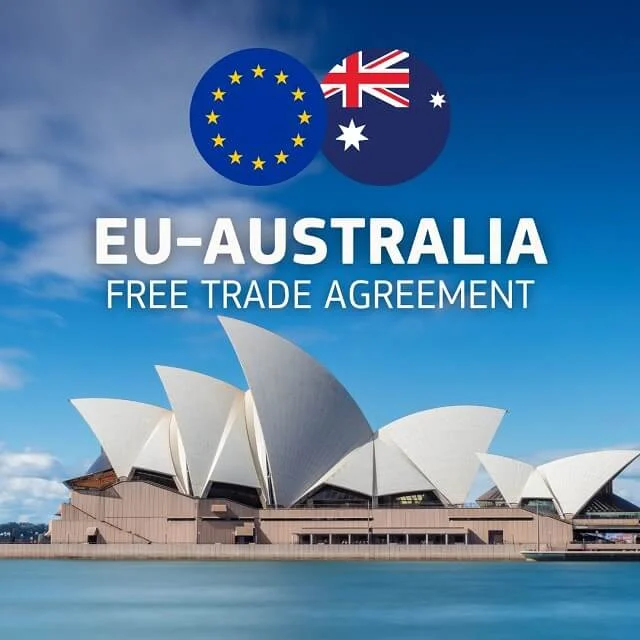
The European Union and Australia signed a strategic free trade agreement (FTA) on 24th March, Tuesday, ending nearly eight years of negotiations and opening the door to deeper economic ties, expanded market access, and enhanced cooperation on critical minerals.
The agreement eliminates tariffs on more than 99 % of goods traded between the EU and Australia. Analysts say it is expected to generate significant economic benefits, including €1 billion in annual savings for European exporters and roughly A$10 billion ($7 billion) in annual gains for Australia.

Australian farmers stand to benefit from expanded tariff‑free quotas for beef, sheep meat, and dairy products, boosting potential exports to Europe and farm incomes. European farmers, meanwhile, may face increased competition from Australian imports, prompting some calls for protective measures.
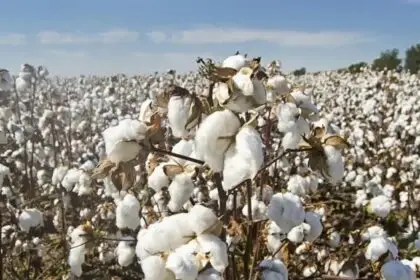
The FTA also creates opportunities for the textile and apparel sector. European textile exporters gain easier access to the Australian market for high-value fabrics, clothing, and technical textiles, while Australian manufacturers can export cotton, wool, and ready-to-wear products to the EU with lower tariffs. Experts suggest the deal could foster cross-border investment and joint ventures in sustainable and innovative textile production.
Also Read: AMANN, AeoniQ Launch Biodegradable High-Performance Sewing Thread
A key component of the pact is cooperation on critical minerals, including lithium, rare earths, and tungsten, essential for clean energy technologies and advanced manufacturing. The agreement facilitates European investment in Australia’s mineral sector and helps secure reliable supply chains amid global competition.
Beyond trade, the FTA strengthens collaboration on services, investment, research, and security, reflecting growing strategic alignment between Europe and Australia. The deal also opens the possibility for Australian participation in the EU’s Horizon Europe research programme.
Some agricultural and industry groups have raised concerns about quota allocations, labeling requirements, and increased competition, particularly in wines, geographically protected products, and textiles.
The agreement now awaits ratification by the European Parliament and the Australian Parliament before taking effect. Implementation timelines for tariffs, mineral exports, and sector-specific quotas are expected to be phased over the coming years.