
The global fashion industry is confronting a largely invisible crisis: massive volumes of textile waste generated during garment production. As sustainability pressures grow, innovators are developing new technologies aimed at tracking waste, improving recycling and redesigning how clothing is manufactured.
Much of the problem begins inside factories long before garments reach consumers. According to research highlighted by sustainability platform Reverse Resources, around 25% of textile fiber produced globally leaves the supply chain during fabric and garment production, a figure that significantly exceeds what most fashion brands estimate.

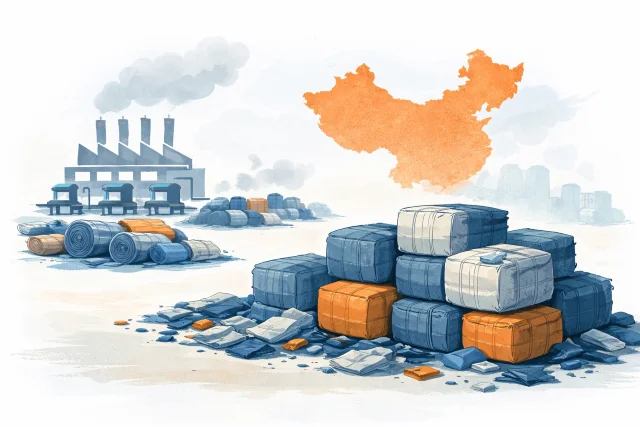
The scale of the issue is especially evident in major manufacturing hubs across Southeast Asia and China. Industry data suggests that roughly 6 million tonnes of textile leftovers are generated each year in those regions alone, representing a potential value of about $15 billion if the materials could be reused or recycled efficiently.
Yet despite the enormous volumes involved, much of this waste remains poorly documented. Researchers say there is little transparency across the apparel supply chain about how much textile waste factories produce or where it ultimately goes.
Also read: Reducing Overproduction and Overconsumption in RMG: Making Demand and Supply the Right Size
Most production leftovers are collected and resold through informal networks of traders. These intermediaries typically sort materials manually without knowing key information such as fiber composition, chemical treatments or brand origin. As a result, many recyclers lack the data required to process textiles effectively, leaving large amounts of material underutilized.
Nienke Kessel, co-founder of Reverse Resources, says the lack of visibility has created a major barrier to building a circular fashion economy.
“There’s a huge amount of waste during the fashion supply chain,” she said, adding that much of the industry still underestimates the scale of the problem.
For garment factories, however, leftover fabrics have also become a crucial economic buffer. Many manufacturers operate with extremely thin margins, sometimes as low as 2%, forcing them to rely on scrap sales as an additional revenue stream. In some production hubs such as Bangladesh, the sale of textile leftovers can represent a significant share of factory profits.
This complex economic structure has made waste difficult to track. While factories generate large volumes of textile scraps, brands rarely have direct access to accurate data on how much waste their production creates.
To address this gap, Reverse Resources has developed software designed to track textile waste inside garment factories. The system allows manufacturers to create digital inventories of leftover fabrics and share detailed information with recyclers and brands.
The platform aims to improve communication across the supply chain and ensure that valuable materials are reused instead of discarded. By providing data on fabric composition and production history, the system could help recyclers process textiles more efficiently while enabling brands to monitor their waste streams.
One opportunity lies in so-called roll-end fabrics, leftover pieces from production runs that are often discarded despite being high-quality material. These pieces, typically ranging from half a meter to several meters in length, can be reintegrated into new production cycles.
In one trial involving denim manufacturing, integrating roll-end materials into a batch of 5,500 jeans saved 114 meters of fabric, demonstrating the potential for significant material savings across large production volumes.
If implemented at scale, systems that track and reuse production leftovers could reduce the fashion industry’s reliance on virgin materials by 2% to 3% globally, according to estimates discussed during the Fashion for Good innovation program in Amsterdam.
While waste-tracking solutions focus on improving the current supply chain, other innovators are trying to redesign the manufacturing process entirely.
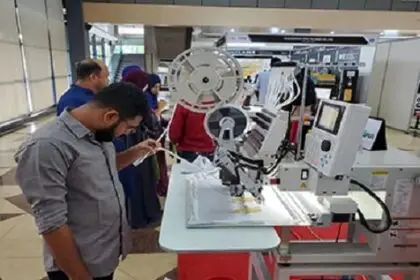
Canadian startup Scalable Garments is developing a new type of knitting technology capable of producing clothing on demand using seamless machines. Unlike traditional cut-and-sew production methods, the system creates garments directly from yarn, eliminating fabric cutting and the associated waste.
The technology combines advanced knitting hardware with digital design software that simulates garments before they are produced. Because designs are created digitally, companies can prototype clothing without using physical materials.
More importantly, garments can be manufactured only after they are sold, reducing the enormous volumes of unsold clothing produced by fashion retailers each year.
Overproduction remains one of the industry’s biggest sustainability challenges. Brands often manufacture large quantities of garments in different sizes and colors to ensure inventory availability, leaving many products unsold and eventually discarded.
By shifting to on-demand manufacturing, innovators believe fashion companies could dramatically reduce excess production while bringing manufacturing closer to consumers. In the future, such technologies could allow clothing to be produced locally in community manufacturing hubs or retail locations rather than in distant factories.
The transition will not happen overnight. Hardware development, funding and supply chain adjustments will take several years before new manufacturing technologies reach commercial scale. But industry experts say the momentum toward circular fashion solutions is growing rapidly.
For startups working at the intersection of sustainability and manufacturing technology, the fashion industry’s waste crisis represents both a major challenge and a significant opportunity.