

The global textile chemicals market is entering a sustained growth phase, driven by expanding textile production, evolving fashion consumption patterns, and rising demand for performance-enhanced and sustainable fabrics.
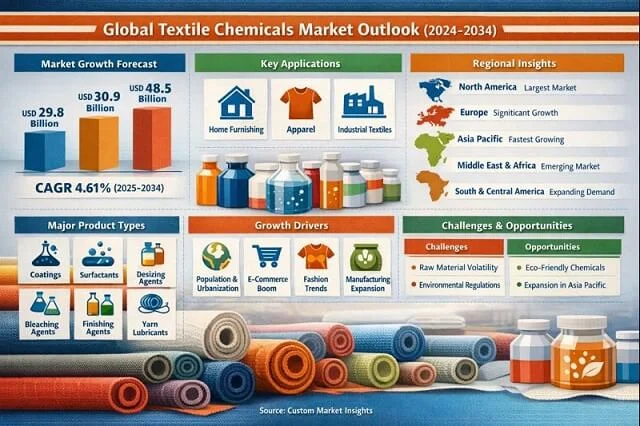
The market was valued at USD 29.8 billion in 2024, increased to an estimated USD 30.9 billion in 2025, and is projected to reach approximately USD 48.5 billion by 2034, registering a compound annual growth rate (CAGR) of about 4.61% between 2025 and 2034.

This steady expansion underscores the strategic importance of textile chemicals across the global textile value chain, particularly as manufacturers seek to balance quality, functionality, and environmental compliance.
Also Read : Primark, Alshaya Set for Middle East Expansion
Textile chemicals play a critical role at nearly every stage of textile processing, from yarn preparation to fabric finishing. Products such as coating agents, surfactants, desizing agents, bleaching chemicals, finishing agents, and yarn lubricants are essential for improving fabric durability, appearance, texture, color fastness, and end-use performance.
Demand for these chemicals is closely linked to the growth of key end-use segments, including apparel, home furnishings, and industrial textiles. Among these, the apparel segment continues to dominate market consumption, supported by fast-changing fashion cycles, increased clothing purchases, and the proliferation of direct-to-consumer (D2C) brands.
Several structural factors are reinforcing market growth. Population growth and rapid urbanization are driving higher consumption of clothing and home textile products, while rising internet and smartphone penetration has accelerated online apparel sales, increasing the need for value-added textile finishes.
At the manufacturing level, the expansion of textile production capacity in developing economies, particularly in Asia Pacific, is significantly boosting demand for processing chemicals.Textile chemicals are embedded across production lines, making them indispensable for meeting quality standards, improving efficiency, and ensuring regulatory compliance.
Fashion trends and growing consumer preference for functional attributes such as wrinkle resistance, stain repellency, and enhanced fabric longevity are further encouraging the use of advanced chemical formulations.While growth prospects remain strong, the market faces notable challenges. Volatility in raw material prices, supply chain disruptions, and stringent environmental regulations in key regions are placing pressure on traditional chemical formulations.
As a result, manufacturers are increasingly investing in eco-friendly and bio-based textile chemicals to align with regulatory expectations and sustainability commitments from global apparel brands.Competition from less chemically intensive or natural textile treatments also poses a long-term challenge, prompting chemical suppliers to differentiate through innovation rather than volume alone
From a regional perspective, North America currently represents the largest market, supported by a strong textile and apparel ecosystem and higher adoption of advanced textile treatments. Europe continues to show significant growth momentum, driven largely by environmental regulations and sustainability-led innovation.
Also Read : EU Ends GSP for India, Seals FTA in Major Trade Shift
However, Asia Pacific stands out as the fastest-growing region, benefiting from large-scale textile manufacturing, export-oriented production, and supportive industrial policies. Emerging growth is also visible in the Middle East & Africa and South & Central America, where expanding textile production and rising domestic consumption are creating new demand pockets.
The market features a competitive landscape with global and regional players such as BASF SE, Solvay SA, The DyStar Group, The Dow Chemical Company, The Lubrizol Corporation, Bayer MaterialScience, Kiri Industries, Omnova Solutions, and others.Leading companies are prioritizing product innovation, performance enhancement, and sustainability, while partnerships, acquisitions, and geographic expansion remain key strategic tools.
Recent developments highlight this shift, including new launches of advanced water-repellent and performance chemicals, as well as collaborations aimed at improving resource efficiency and reducing environmental impact during textile processing.
With a stable growth trajectory, diversified applications, and rising emphasis on sustainable solutions, the textile chemicals market continues to present attractive investment opportunities.Expansion of manufacturing hubs in Asia Pacific, growing demand for technical textiles, and innovation in specialty chemicals are expected to support long-term returns and market resilience.
As global textile producers adapt to changing consumer expectations and regulatory frameworks, textile chemicals will remain a critical enabler of quality, performance, and sustainability across the industry.