

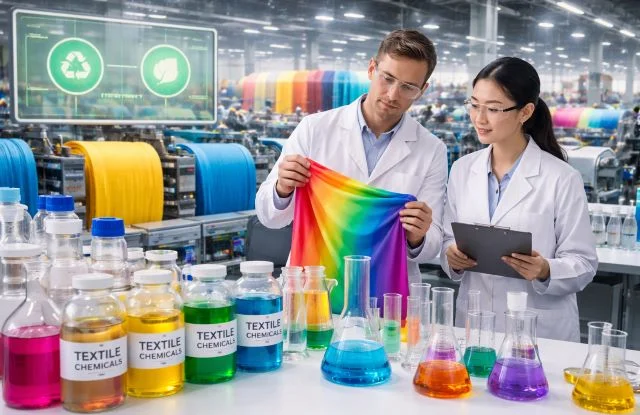
The global textile chemicals market is set for significant growth, with projections indicating that the market size will reach USD 48.03 billion by 2035, up from USD 29.31 billion in 2025. This growth is expected to occur at a compound annual growth rate (CAGR) of 5.15% from 2026 to 2035, driven by increasing demand for advanced textile chemicals, innovations in textile processing, and a growing focus on sustainability.
Textile chemicals are a critical component of the textile manufacturing ecosystem, used in various stages of textile production, including pre-treatment, dyeing, printing, and finishing. These chemicals enhance essential fabric properties such as durability, color fastness, softness, water resistance, and antimicrobial performance.

The global textile and apparel industry is expanding rapidly, and with it, the demand for textile chemicals has surged. From fashion and home furnishings to industrial textiles and technical fabrics, textile chemicals are essential for meeting the growing needs of these diverse segments.
A major trend in the textile chemicals market is the increasing shift towards eco-friendly and biodegradable chemicals. As consumer demand for greener products rises, manufacturers are adopting sustainable production processes. These processes reduce environmental impact by using water-efficient and low-emission chemical solutions.
In addition to sustainability, there is also rising demand for smart textiles, which are fabrics with advanced functionalities such as antimicrobial protection, UV resistance, temperature regulation, and self-cleaning capabilities. The growing demand for these textiles is driving innovation in textile chemicals, creating new opportunities in the market.
Also Read: Global Footwear Market Nears Half‑Trillion Dollar Milestone
Furthermore, the integration of digital technologies such as IoT and artificial intelligence (AI) is enhancing the efficiency of textile production, enabling real-time monitoring and reducing waste while improving product quality.
The textile chemicals market is being driven by several key factors. The expansion of the global textile industry, fueled by population growth and rising disposable incomes, is a major factor increasing the demand for textile chemicals.
Consumers are seeking more durable, comfortable, and functional fabrics, which has led to a rise in the demand for performance fabrics and, consequently, specialized textile chemicals. Additionally, the changing fashion trends, particularly the rapid cycles of fast fashion, are contributing to the increased need for textile chemicals, especially in dyeing, finishing, and processing.
Technological advancements in textile chemistry are also accelerating market growth. Innovations in bio-based and high-performance chemicals are helping manufacturers meet the growing demand for textiles with specialized properties. Despite these drivers, the market faces several challenges.
Stricter environmental regulations related to wastewater discharge and chemical usage have raised operational costs for manufacturers, pushing them to seek innovative solutions to meet both regulatory standards and production demands.
Additionally, some textile chemicals are harmful to human health and the environment, leading to increased scrutiny and restrictions on their use. While eco-friendly alternatives are gaining popularity, they are often more expensive than conventional chemicals, limiting their adoption, especially in cost-sensitive markets.
There are several opportunities in the textile chemicals market, particularly in the development of bio-based chemicals. As sustainability becomes more important, the demand for renewable and eco-friendly textile chemicals is creating new market avenues. The textile industries in emerging markets, particularly in Asia-Pacific, Latin America, and Africa, are expanding rapidly, presenting significant opportunities for textile chemical suppliers.
The demand for technical textiles in sectors such as healthcare, automotive, and construction is creating new applications for textile chemicals, while the growing market for smart textiles is driving innovation in the sector.
The Asia-Pacific region dominates the textile chemicals market, largely due to extensive textile production in countries like China, India, and Bangladesh. The region benefits from low manufacturing costs and strong export demand. North America is also experiencing steady growth, driven by demand for high-performance textiles and ongoing technological advancements in textile manufacturing.
In Europe, there is a significant focus on sustainability, which is driving the adoption of eco-friendly textile chemicals. Latin America, the Middle East, and Africa are emerging markets with rapidly growing textile industries and increasing investments in manufacturing infrastructure, creating new opportunities for textile chemical suppliers.
As the textile chemicals market continues to evolve, technological advancements, the rising demand for performance fabrics, and the shift towards sustainability will drive growth in the industry. Manufacturers will need to innovate and adopt more sustainable solutions while meeting the increasing demand for high-quality, functional fabrics. With emerging markets offering new opportunities, the future of the textile chemicals industry looks promising, especially as consumer preferences shift towards more eco-conscious products.