
Global wool prices strengthened in recent auctions, supported by robust buying from Chinese processors and growing global interest in sustainable natural fibres, according to the latest market data from the Australian Wool Exchange.
The benchmark Eastern Market Indicator (EMI), a key global price gauge tracked by the Australian Wool Exchange, closed the latest auction series at around 1,783 Australian cents per kilogram, reflecting a steady rise compared with the previous sales as demand improved for finer Merino grades.

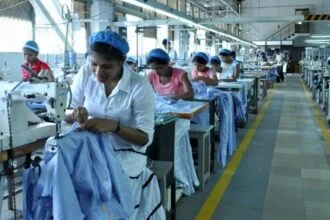
Traders said Chinese buyers were particularly active in the auctions, competing strongly for high-quality Merino wool used in premium apparel and knitwear. China remains the largest destination for Australian wool exports, and its mills play a central role in determining global price trends.
“Chinese processors showed consistent demand across the finer microns,” market analysts said, noting that mills are replenishing stocks as garment manufacturers prepare for upcoming production cycles.
Industry participants also pointed to the growing global shift toward environmentally responsible textiles as a factor supporting wool demand. Brands and consumers increasingly favour natural fibres that offer biodegradability and lower environmental impact compared with synthetic alternatives.
Also Read: Texhibition Istanbul Attracts 19,325 Professionals, Boosts Turkish Textile Exports
This sustainability trend is helping wool regain momentum in fashion and outdoor apparel markets, where companies are highlighting renewable fibres and circular production models in response to stricter environmental standards and consumer expectations.
At auction, about 45,000 bales were offered during the latest trading week, with the majority sold as buyer participation remained strong despite some volatility across micron categories.
While fine Merino wool posted gains, some broader crossbred types saw limited movement, reflecting selective buying patterns and quality differences within the catalogues.
Market analysts say the near-term outlook for wool will largely depend on demand from Asian processors and the pace at which apparel brands accelerate their transition toward natural and sustainable materials. If these trends persist, prices could remain supported in upcoming auction series.