

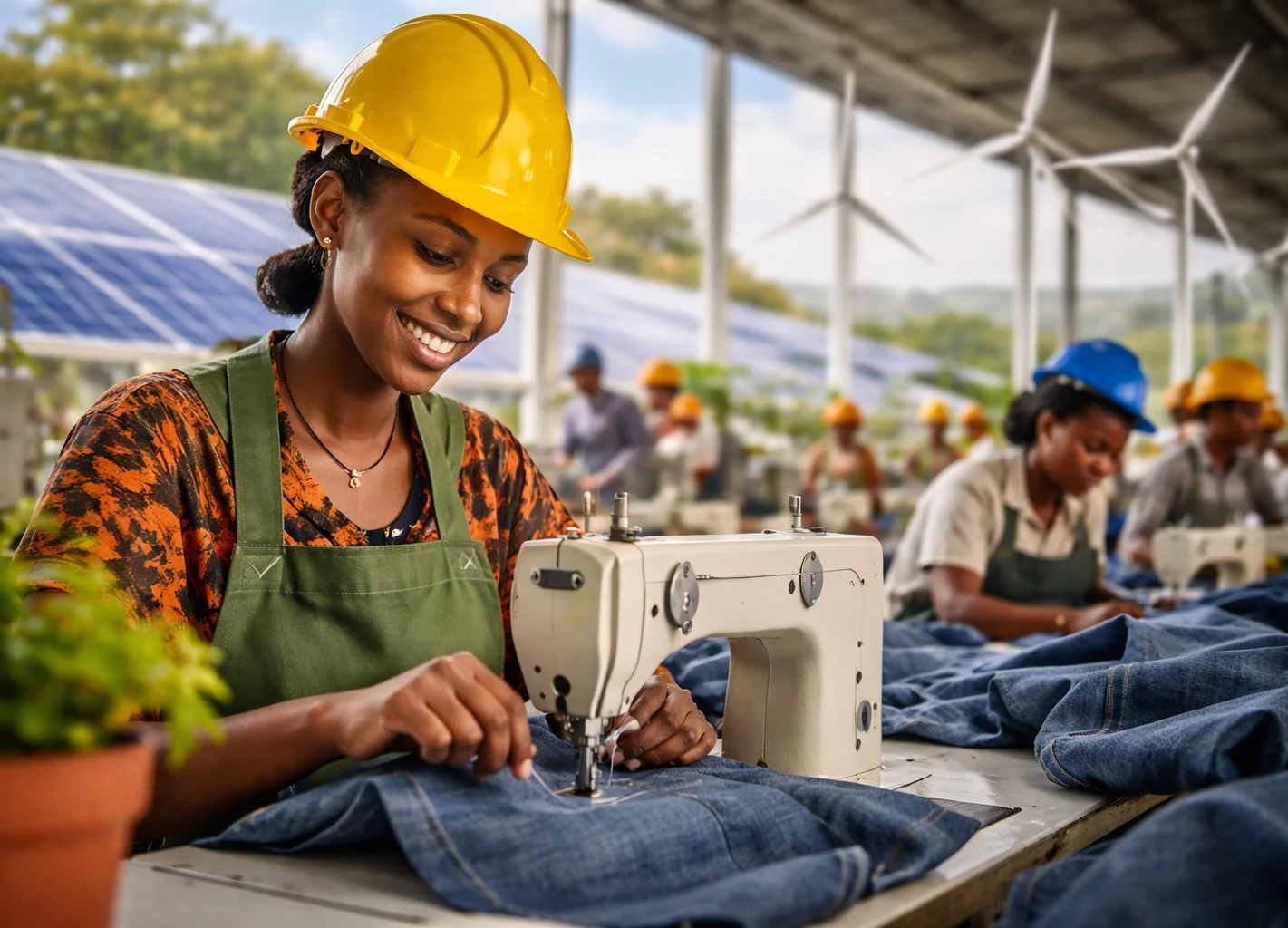
The International Labour Organization (ILO), with support from the Government of Japan, has launched a new initiative aimed at building a climate-resilient, productive and socially responsible textile and garment sector in Ethiopia.
The one-year programme will support 40 factories across key industrial hubs including Hawassa, Addis Ababa, Adama, Dukem and Kombolcha, focusing on improving resource efficiency, workplace safety and inclusive growth.

Implemented under the ONE ILO Siraye Programme, the initiative combines enterprise-level training with policy support to help manufacturers respond to climate risks, occupational safety and health (OSH) challenges and evolving global sustainability standards.
At the factory level, participating companies will undergo SCORE Training integrated with Kaizen-based continuous improvement methods. The approach is designed to reduce waste, lower energy consumption and improve operational efficiency, while promoting more circular production practices.
The project will also introduce digitalised OSH tools, enabling factories to monitor risks such as heat stress and ventilation in real time. These systems are expected to strengthen compliance and improve working conditions in a sector increasingly exposed to climate-related pressures.
A central component of the initiative is its focus on workforce development. Through the Women’s Leadership Development Programme (WLDP), female workers will receive training to enhance supervisory and leadership skills, supporting more inclusive workplace structures in Ethiopia’s growing textile industry.
Also read: Germany Launches Centre to Increase Textile and Apparel Workers’ Rights
The programme will also leverage Japanese expertise in areas such as energy efficiency, cleaner production and sustainable manufacturing systems. This collaboration aims to deliver practical, locally adapted solutions that align with Ethiopia’s industrial development strategy.
At the national level, the initiative will support dialogue between government, employers and workers to identify policy gaps and strengthen responsible business practices. Assessments on climate risk, workplace safety and circularity will be used to inform policy frameworks aligned with Ethiopia’s climate commitments and Nationally Determined Contributions (NDCs).
The project will run from March 15, 2026, to March 14, 2027, to generate scalable models for sustainable industrial transformation.
The launch comes as global apparel supply chains face increasing pressure to decarbonise and improve labour standards, positioning Ethiopia as a key emerging hub in the transition towards more resilient and sustainable manufacturing systems.