
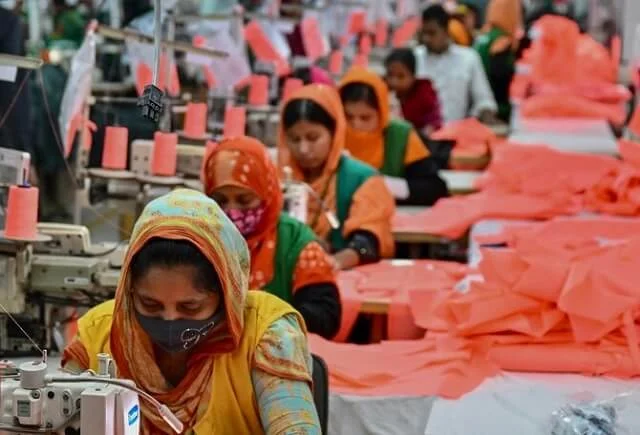
Bangladesh’s garment industry is closely monitoring the India-European Union trade deal, which is expected to improve India’s competitiveness in the European market and could reshape regional apparel sourcing, industry executives said.
Bangladesh has long benefited from duty-free access to the EU under preferential schemes, making it one of the top apparel suppliers in the region. Data from Eurostat shows Bangladesh shipped about $19.77 billion worth of ready-made garments to the EU in 2024, an increase of roughly 4.9 percent from the previous year, totaling around 1.23 billion kilograms in volume. Exports continued to rise in 2025, with the first eleven months reaching approximately €18.06 billion, a 7.7 percent year-on-year increase.

Also Read: Rebalancing The Yarn Equation In Bangladesh’s Apparel Industry
However, analysts warn that the India-EU trade deal could reduce the tariff advantage Bangladesh has enjoyed, as India is expected to gain preferential or duty-free access for garments. Indian textile hubs such as Tiruppur and Surat could attract European buyers seeking shorter lead times, diversified supply chains, and compliance with sustainability standards, areas where demand is rising sharply.
“Bangladesh’s scale and cost advantages remain strong, but the deal could shift some orders toward India, particularly in higher-value or sustainable garment segments,” said a Dhaka-based industry official.
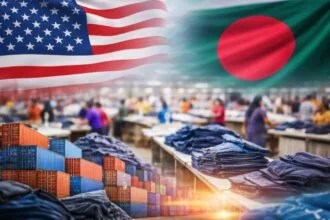
Bangladeshi exporters also note that global shifts, including EU rules on carbon emissions and U.S. tariffs on Asian apparel, are increasing pressure to maintain competitiveness and diversify markets. Many are investing in value-added garments, sustainable fibers, and modern production facilities to strengthen their position.
The India-EU trade deal is expected to finalize in the coming months, with implementation likely after ratification by EU member states. While Bangladesh’s garment sector remains resilient, the pact signals a more competitive landscape in Europe, where India could capture market share previously dominated by Bangladesh.