
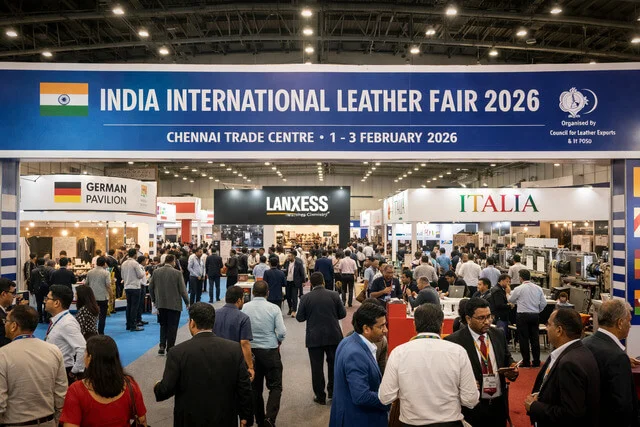
India’s leather and footwear industry is poised for a significant boost following the 39th India International Leather Fair (IILF) 2026 and the recent India‑European Union free trade agreement that eliminated tariffs on leather and footwear exports into the bloc. The fair, held from Feb. 1 to Feb. 3 at the Chennai Trade Centre, brought together more than 425 domestic exhibitors and around 67 international participants, showcasing the full value chain from raw materials to finished goods and fostering new business links with buyers from Europe and other regions.
Industry officials said the three‑day event underlined India’s export potential at a time when the sector is navigating global trade challenges and shifting market dynamics. Leather and non‑leather footwear exports, which rose about 25 per cent to roughly ₹48,667 crore (US$ 5.7 billion) in fiscal 2024‑25 and were projected to approach ₹55,497 crore (US$ 6.5 billion) in the current year, have been under pressure from high tariffs in the United States but are expected to gain traction in Europe following the trade pact.

The EU accounts for about 43 per cent of India’s leather and footwear exports, making access to the nearly US$ 100 billion EU market vital for growth. With tariffs reduced to zero under the India‑EU deal, exporters gained a competitive edge against peers in Bangladesh, Vietnam and Cambodia, which already enjoy duty‑free access. Officials at the fair said this market opening could accelerate orders and strengthen long‑term partnerships with European brands.
Also Read: India’s Budget 2026 Weaves a Stronger Textile Future
Council for Leather Exports executives said the fair and trade agreement together could help India reach its ambitious industry targets, including overall sector turnover of US$ 50 billion by 2030 with exports contributing US$ 14 billion. The platform also provided opportunities for Indian manufacturers to engage with global designers and technology partners, fostering innovation and design collaborations that could lift value‑added exports.
Analysts noted that while high tariffs in key markets such as the United States have weighed on growth, strategic diversification into EU and UK markets and policy support for inputs like shoe uppers is expected to support resilience and job creation in leather clusters across Tamil Nadu, Uttar Pradesh and West Bengal.
Industry participants at the fair said the combined impact of heightened global visibility, new market access and strengthened business ties marks a turning point for India’s leather sector, positioning it for deeper integration into global supply chains and higher export volumes in the years ahead.