

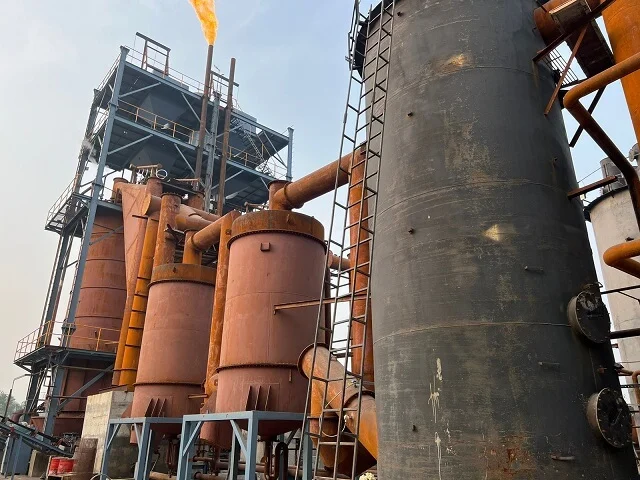
India is accelerating plans to expand coal gasification capacity as it prepares for potential energy shortages triggered by global fuel supply disruptions, according to government officials and industry reports.
The move comes as volatility in international gas markets—particularly linked to Middle East supply uncertainties—raises concerns over fuel availability for power generation and industrial use. Policymakers are positioning coal gasification as a key buffer, allowing the country to convert its abundant coal reserves into synthetic gas and chemical feedstocks.

Coal gasification transforms coal into syngas, which can be used to produce hydrogen, methanol, ammonia and substitute natural gas, reducing reliance on imported liquefied natural gas (LNG) and crude oil.
Officials have reiterated a national target to gasify 100 million tonnes of coal by 2030, supported by investments exceeding ₹85,000 crore, as part of a broader strategy to strengthen energy security and industrial self-sufficiency.
Also Read: Why Sustainability Now Requires Proof, Not Promises
The policy push coincides with expectations of record electricity demand during the summer season, with peak consumption projected to surpass 270 gigawatts. Authorities are seeking to ensure uninterrupted supply by diversifying fuel sources and maximizing domestic resource utilization.
Despite rapid expansion in renewable energy, coal continues to account for more than 70% of India’s electricity generation, underscoring the country’s dependence on fossil fuels to sustain economic growth.
“Coal gasification offers a strategic pathway to reduce import dependence while supporting critical sectors such as fertilizers, petrochemicals and steel,” an energy official said, noting that several large-scale projects are already in development.
However, the initiative also highlights a policy balancing act. While gasification is cleaner than direct coal combustion and enables better emissions control, it remains carbon-intensive, raising concerns among environmental groups about its long-term sustainability.
India’s pivot toward coal-based alternatives could reshape energy dynamics across South Asia, particularly for neighboring Bangladesh, which relies heavily on imported LNG to power its industries and textile sector.
If global gas supplies tighten further, competition for LNG cargoes may intensify, potentially driving up prices for smaller import-dependent economies. This could increase operational costs for Bangladesh’s export-oriented manufacturing industries, including ready-made garments.
At the same time, India’s reduced reliance on imported gas could ease some pressure on global LNG markets over the longer term, though the near-term impact is expected to be limited.
Energy analysts say the shift underscores a broader regional trend: countries are prioritizing energy security over rapid decarbonization, particularly in the face of geopolitical uncertainty.
As global energy markets remain volatile, India’s coal gasification push signals a pragmatic approach to balancing economic growth, energy security and environmental commitments.
While the long-term trajectory still points toward renewables, fossil fuel-based transition technologies are likely to play a critical role in bridging supply gaps across emerging economies.