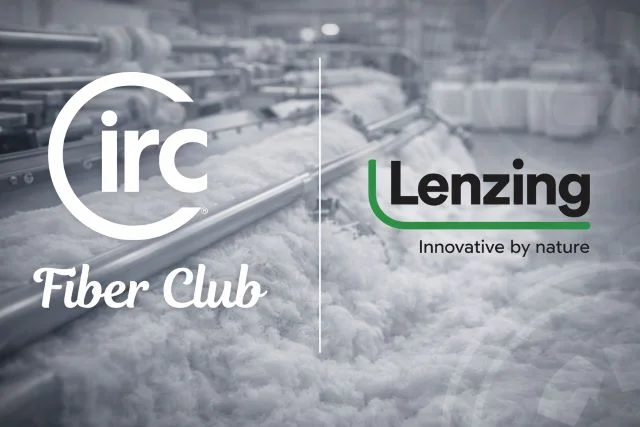
Lenzing Group has joined Fiber Club as a supply chain member, reinforcing industry efforts to scale the commercialization of recycled materials across the global textile value chain.
The move builds on Lenzing’s existing partnership with textile-to-textile recycling innovator Circ and brings the company’s fibre development and commercialization expertise into the Fiber Club ecosystem. The initiative connects brands and supply chain stakeholders working to align volumes and infrastructure needed to integrate Circ’s recycled materials within established production systems.

By coordinating commitments across the value chain, Fiber Club aims to reduce barriers to commercialization and create the conditions necessary for scalable adoption of next-generation recycled fibres.
“By lowering the barriers to commercialization and working within proven fibre types like TENCEL™ and the REFIBRA™ technology, we hope to turn ambition into real, scalable adoption,” said Jemma Breen, Director of Global Brands & Retailers at Lenzing Group.
Also read: Madewell Joins Fiber Club To Scale Recycled Textiles
Lenzing’s participation is expected to strengthen the transition from innovation to industrial deployment. As a global producer of wood-based specialty fibres, including TENCEL™ and fibres powered by REFIBRA™ technology, Lenzing has extensive experience in integrating recycled content into commercially viable fibre platforms.
Industry experts note that scaling textile-to-textile recycling requires more than technological breakthroughs. It demands coordinated action among fibre producers, recyclers, mills, and brands to ensure demand certainty and infrastructure readiness. Aligning production volumes with brand commitments remains one of the key challenges in moving recycled materials beyond pilot projects.
Through Fiber Club, participating brands and supply chain leaders are working collectively to establish clearer demand signals and investment pathways. The goal is to move recycled fibres from limited trials to consistent, large-scale integration within existing supply chains.
The announcement reflects a broader industry push toward circularity as fashion companies face mounting regulatory requirements and growing consumer expectations for lower-impact materials. Textile-to-textile recycling technologies such as those developed by Circ are increasingly viewed as critical tools in reducing reliance on virgin raw materials.
With Lenzing joining as a supply chain member, Fiber Club expands its collaborative network focused on operationalizing circular solutions.
As the apparel sector seeks viable pathways to scale recycled materials, initiatives like Fiber Club highlight how structured collaboration can help convert sustainability ambition into measurable, market-ready outcomes.