
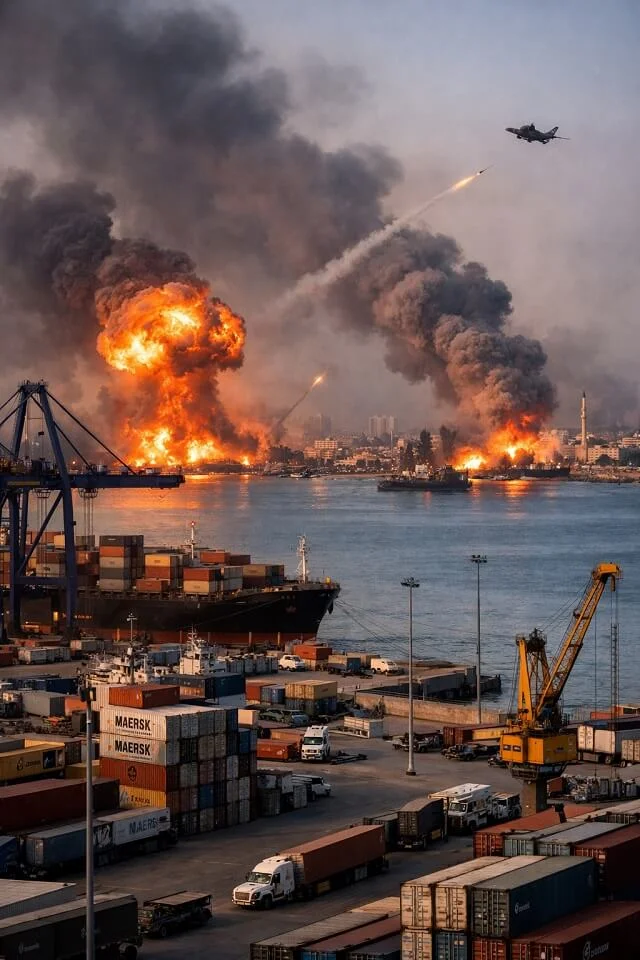
Bangladesh’s exporters are bracing for longer shipment lead times and higher freight costs as escalating tensions in the Middle East raise the risk of disruption along critical global trade corridors, particularly the Strait of Hormuz.
Industry officials and logistics providers say the country’s trade flows are highly exposed to any instability in the Gulf, with roughly 90 percent of Bangladesh’s imported primary energy—including crude oil, refined fuel and liquefied natural gas—moving through the narrow maritime chokepoint. Any sustained disruption could quickly inflate the national energy import bill and feed through to factory operating costs.

The stakes are significant for Bangladesh’s export-driven economy. The country shipped goods worth more than $55 billion in the last fiscal year, dominated by ready-made garments that depend heavily on predictable shipping schedules to meet tight delivery windows in Europe and North America. Freight forwarders warn that even precautionary rerouting by carriers can add one to two weeks to transit times, particularly if vessels are forced to bypass Gulf-linked routes or avoid high-risk zones.
Global energy markets are already showing sensitivity. Oil prices have risen in recent weeks amid geopolitical uncertainty, a trend that typically feeds directly into marine bunker fuel costs and air cargo rates. For Bangladesh, which imports the bulk of its fuel requirements, higher crude prices could simultaneously raise domestic power tariffs and international freight bills, creating a double squeeze on exporters’ margins.
Also Read: World Braces for Possible Oil Price Spike Amid Gulf Tensions
Shipping executives say insurers are closely monitoring developments around the Strait of Hormuz, through which about one-fifth of the world’s oil supply and more than one-fifth of global LNG trade pass each day. Even without a full closure, the imposition of war-risk premiums or tighter underwriting conditions could push up freight charges for South Asian exporters.
Air cargo faces similar vulnerabilities. Bangladesh relies heavily on Middle Eastern hubs such as Dubai and Doha for transshipment of high-value and time-sensitive apparel orders. Any airspace restrictions or flight suspensions in the region could disrupt capacity and extend delivery timelines, particularly during peak export seasons.
Economists note that Bangladesh’s direct trade with conflict-affected countries in the Middle East remains relatively small, but the indirect exposure through energy, logistics and remittance channels is substantial. The Gulf region accounts for a major share of the country’s overseas workforce, meaning prolonged regional instability could also weigh on remittance inflows and foreign exchange reserves.
Business leaders are urging exporters to build buffer time into delivery schedules, diversify routing options and closely monitor freight markets. With global demand still uneven and cost pressures already elevated, they warn that any sustained disruption around the Strait of Hormuz could further test the resilience of Bangladesh’s external trade sector in the months ahead.