
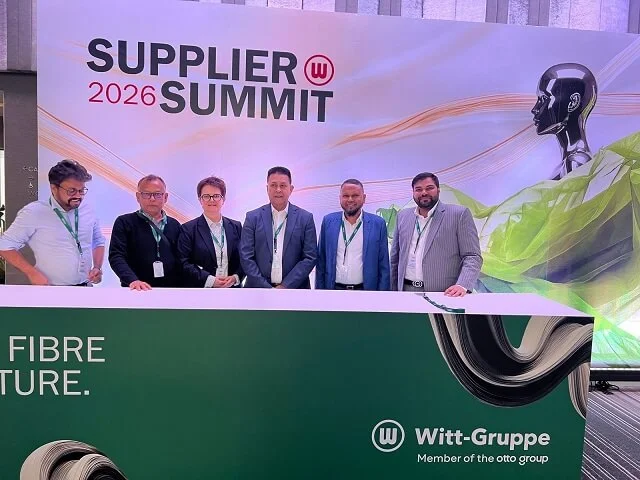
Pakiza Knit Group, a leading Bangladeshi apparel manufacturer, has participated in the Witt-Gruppe Supplier Summit 2026, marking another step in Bangladesh’s growing engagement with major European fashion retailers and reinforcing the country’s position in the global textile supply chain.
The summit, hosted by Germany-based fashion retailer Witt-Gruppe, brought together selected international suppliers to discuss long-term sourcing strategies, sustainability priorities and future collaboration in a rapidly evolving apparel market. Pakiza Knit Group attended the event as a Bangladeshi supplier, reflecting increasing confidence among European buyers in Bangladesh’s manufacturing capabilities.

Industry observers say participation in such supplier summits allows Bangladeshi manufacturers to engage directly with buyers on strategic planning rather than transactional sourcing alone. For Bangladesh’s textile and apparel sector, which accounts for more than 80 percent of the country’s export earnings, closer alignment with European retailers is seen as critical as buyers place greater emphasis on transparency, environmental compliance and value-added production.
Pakiza Knit Group’s presence at the summit also highlights the role of vertically integrated manufacturers from Bangladesh in meeting evolving buyer expectations. Companies with in-house knitting, dyeing and garmenting facilities are increasingly preferred by European retailers seeking supply chain resilience and faster lead times.
Also Read: 360 TSL and Bangladesh Textile Industry’s Green Building Shift
Witt-Gruppe, part of Germany’s Otto Group, operates multiple fashion brands across Europe and maintains long-term sourcing relationships with suppliers in Asia. Supplier engagement platforms such as the 2026 summit are used to communicate sourcing roadmaps, sustainability targets and quality benchmarks.
Analysts note that Bangladeshi participation in buyer-led forums can help local manufacturers better anticipate shifts in demand, regulatory requirements and compliance standards in key export markets. This engagement is expected to support Bangladesh’s broader efforts to move up the value chain and safeguard export competitiveness amid rising global scrutiny of apparel supply chains.
For the wider Bangladeshi textile industry, representation at high-level supplier summits is increasingly viewed as a signal of maturity, underscoring the country’s transition from volume-driven manufacturing toward strategic partnership-based sourcing.