
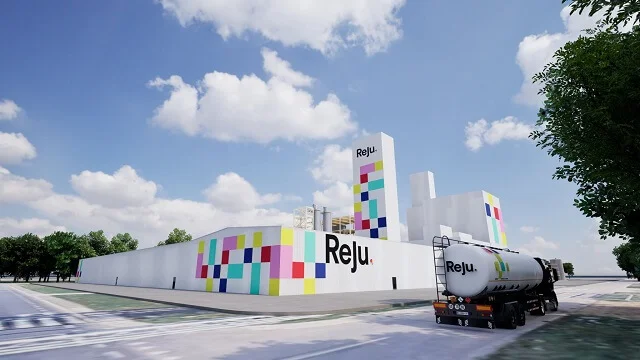
Reju, the textile-to-textile recycling company backed by Technip Energies, has selected Lacq in southwestern France as the site for its first industrial-scale Regeneration Hub, advancing efforts to scale circular polyester production in Europe.
The new facility, to be developed on the Induslacq industrial platform in the Pyrénées-Atlantiques region, will use Reju’s proprietary chemical depolymerization technology to convert post-consumer polyester textiles into regenerated raw materials. The process breaks down polyester waste into its molecular components, which are then purified and repolymerized into new recycled polyester suitable for textile applications.

Reju said the France Regeneration Hub is designed to process significant volumes of end-of-life textiles sourced from national and regional collection systems, helping address Europe’s growing textile waste challenge. The European Union is tightening regulations around textile waste under its circular economy action plan, increasing pressure on brands and manufacturers to incorporate recycled fibers and improve traceability across supply chains.
The company aims to produce regenerated polyester with a lower carbon footprint than virgin polyester derived from fossil fuels. By focusing on textile-to-textile recycling rather than downcycling into lower-value products, Reju is positioning itself as part of a new generation of chemical recycling firms seeking to close the loop in the fashion and apparel industry.
Also Read: Bangladesh Apparel Prices Fall in EU Market
The Lacq project is expected to support local economic development, with job creation during construction and operations. Final investment decisions remain subject to regulatory approvals and corporate board clearance.
The France hub forms part of Reju’s broader international rollout strategy. The company has previously launched a demonstration site in Frankfurt, Germany, and announced plans for additional industrial-scale facilities in the Netherlands and the United States, creating a network of regeneration hubs intended to supply recycled polyester to global apparel and textile markets.
Polyester accounts for more than half of global fiber production, but less than 1% is currently recycled back into new textiles, according to industry estimates. As fashion brands face mounting scrutiny over environmental impacts, scalable chemical recycling infrastructure is seen as critical to achieving meaningful reductions in waste and emissions.
With its France Regeneration Hub, Reju is seeking to establish itself as a key player in Europe’s emerging circular polyester ecosystem, aligning industrial-scale recycling capacity with the region’s sustainability ambitions.