
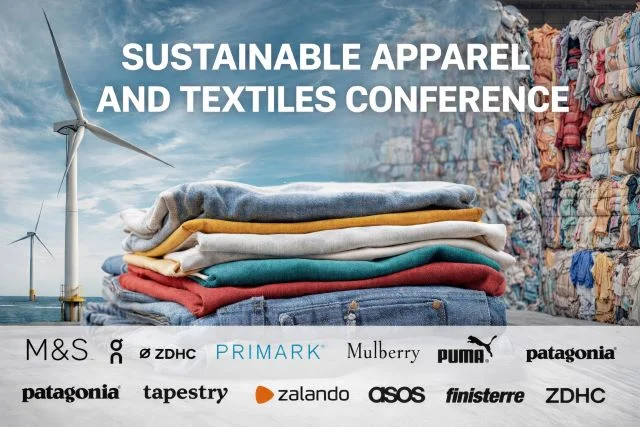
Global fashion brands, sustainability experts and supply chain leaders will gather in Amsterdam on April 29–30, 2026 for the Sustainable Apparel and Textiles Conference organized by Innovation Forum, as the apparel sector faces increasing pressure to turn sustainability commitments into measurable action.
The event is expected to bring together leaders from across the global apparel and textile value chain to address critical issues including regulatory readiness, climate strategy, circular business models and social responsibility within supply chains.

Participants highlighted for the conference include major fashion and retail companies such as Marks & Spencer (M&S), On, Primark, Mulberry, Puma, Patagonia, Tapestry, Zalando, ASOS and Finisterre, along with industry initiatives like Zero Discharge of Hazardous Chemicals (ZDHC). Their participation reflects growing collaboration across the industry as brands, suppliers and sustainability organizations work together to accelerate environmental and social progress.
As sustainability expectations from governments, consumers and investors continue to rise, the conference will focus heavily on practical implementation rather than long-term pledges. Organizers say the 2026 programme is designed to support companies as they navigate a rapidly evolving regulatory and commercial landscape.
One of the key areas of discussion will be regulatory developments in the European Union, particularly the Ecodesign for Sustainable Products Regulation (ESPR). The new regulation aims to improve the sustainability of products placed on the EU market by introducing stricter design and environmental performance requirements.
Closely linked to ESPR is the introduction of Digital Product Passports, which are expected to transform product transparency in the fashion industry. The passports will provide detailed information about a product’s origin, materials, environmental impact and lifecycle, enabling consumers and regulators to track sustainability performance more effectively.
Also read: Bangladesh Announces 7th Sustainable Apparel Forum 2026 in Dhaka
Industry experts say preparing for these regulatory changes will require major improvements in data collection, traceability systems and collaboration across supply chains.
Another major theme of the conference will be decarbonisation within the textile and apparel sector. The industry is one of the largest contributors to global industrial emissions, driven by energy-intensive manufacturing processes, complex global supply chains and growing consumption of fashion products.
Participants will explore how brands and suppliers can finance and scale decarbonisation initiatives, including renewable energy adoption, energy efficiency improvements and supply chain climate partnerships.
The conference will also examine the role of circular economy strategies in reducing the environmental footprint of fashion. Discussions will focus on the commercial viability of recycled and regenerative materials and how companies can integrate these alternatives into mainstream production without compromising quality, performance or affordability.
Experts will also address the transition from linear production models toward circular systems where products are designed for reuse, repair and recycling.
Equally important will be discussions around equitable partnerships between brands and suppliers. As sustainability requirements increase, many manufacturers face growing financial and operational pressures to meet new standards.
Industry stakeholders are increasingly recognizing the need for more balanced commercial relationships that ensure suppliers receive adequate support and investment to implement sustainability improvements.
Worker protection and labour rights will also form part of the agenda, particularly as the industry transitions toward new production models. Ensuring that sustainability initiatives support decent work and safe working conditions remains a key priority for global apparel supply chains.
Responsible chemical management will be another important topic during the conference. Proper chemical management is essential for reducing environmental pollution, improving worker safety and supporting compliance with global environmental regulations.
ZDHC, one of the organizations participating in the conference, has played a major role in advancing chemical safety in the textile industry through initiatives such as its Manufacturing Restricted Substances List and collaborative programs aimed at eliminating hazardous chemicals from production processes.
Lauren Zahringer, Market Engagement and Stakeholder Development Manager at ZDHC, will attend the conference to engage with brands, suppliers and partners interested in strengthening responsible chemical management practices.
Organizers say conferences that bring together interconnected sustainability issues are becoming increasingly important as companies attempt to align climate goals, regulatory compliance and social responsibility within complex global supply chains.
The Sustainable Apparel and Textiles Conference is organized by Innovation Forum, an independent London-based company specializing in sustainability-focused events, research and stakeholder engagement.
Innovation Forum works with a wide range of organizations across industries to support the development of sustainable business strategies. The company collaborates with partners including IDH – The Sustainable Trade Initiative, Textile Exchange, Cargill, Everland and Cotton Connect to deliver industry-focused sustainability events.
In addition to conferences, the organization also works with corporate and non-profit partners such as Nestlé, Bayer, BSI, Tesco, WWF and Walgreens Boots Alliance to develop stakeholder engagement initiatives, research projects and sustainability communications programs.
Through its conferences, publishing activities and collaborative projects, Innovation Forum aims to help businesses navigate complex sustainability challenges and accelerate the transition toward more responsible production and consumption systems.
As governments introduce stricter environmental regulations and consumer awareness around sustainability continues to grow, industry experts say platforms like the Amsterdam conference will play a crucial role in helping fashion companies share knowledge, build partnerships and drive practical solutions for the future of the apparel industry.