
The global sustainable fashion market is expected to expand rapidly over the next decade as consumers, apparel brands and policymakers increasingly prioritize environmentally responsible production. According to market research firm DataM Intelligence, the sector, valued at approximately $7.7 billion in 2023, is projected to grow to about $39.7 billion by 2031, representing a compound annual growth rate (CAGR) of around 23 percent between 2024 and 2031.
Sustainable fashion refers to clothing, footwear and accessories produced using environmentally friendly materials, ethical labor standards and manufacturing processes designed to minimize environmental impact. The concept also includes circular economy practices such as recycling, repair, reuse and extending product life cycles.

The rapid growth of the sector reflects rising global concerns over the environmental footprint of traditional apparel production. The fashion industry is estimated to account for roughly 10 percent of global carbon emissions and generates tens of millions of tonnes of textile waste annually. Increasing scrutiny from consumers, environmental organizations and regulators has prompted fashion companies to accelerate the shift toward sustainable materials and responsible sourcing.
Also read: Sustainable Apparel & Textile Conference to Convene Global Fashion Leaders in Amsterdam
Consumer awareness has become one of the strongest drivers of the market. Surveys indicate that younger consumers, particularly millennials and Generation Z, are significantly more likely to prefer brands that demonstrate environmental responsibility. Many shoppers now actively seek information about supply chains, material sourcing and manufacturing practices before purchasing apparel products.
Retailers and fashion brands are responding by expanding transparency initiatives and publishing sustainability reports detailing carbon emissions, water consumption and labor practices. Supply chain traceability technologies, including blockchain and digital product passports, are also being explored to provide greater transparency for consumers.
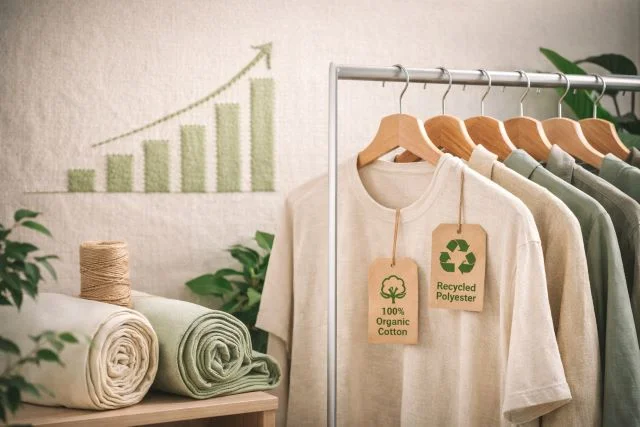
Material innovation is playing a critical role in the expansion of the sustainable fashion sector. Apparel manufacturers are increasingly replacing conventional textiles with alternatives that require fewer resources and generate less pollution. Organic cotton, recycled polyester, hemp fibers, bamboo textiles and regenerated fabrics such as lyocell and modal are among the fastest-growing materials in the market.
Recycled polyester, for example, is often produced from post-consumer plastic bottles and has become widely used in sportswear and outdoor apparel. According to industry estimates, producing recycled polyester can reduce energy consumption by up to 50 percent compared with virgin polyester production.
Similarly, organic cotton production avoids synthetic pesticides and fertilizers while reducing water consumption. Alternative plant-based fibers, including materials derived from pineapple leaves, banana fibers and agricultural waste, are also gaining attention as sustainable textile solutions.
Recent corporate initiatives illustrate how major fashion brands are accelerating sustainability investments. In October 2025, luxury brand Stella McCartney introduced a new line of bio-based leather alternatives produced from mycelium and plant materials. The company said the innovation aims to reduce the environmental impact of conventional leather production while maintaining durability and luxury-grade performance.
Sportswear company Adidas also expanded its circular fashion program in September 2025, allowing customers to return used footwear and apparel for recycling into new performance products. The program is part of the company’s broader effort to reduce textile waste and increase the share of recycled materials used in production.
Fast fashion retailer H&M has similarly expanded its global garment collection program, which allows consumers to return unwanted textiles at retail stores for recycling and reuse. The initiative supports the company’s long-term target of increasing the share of recycled or sustainably sourced materials in its collections.
Patagonia, known for its environmental advocacy, launched a regenerative cotton clothing line in 2025 aimed at supporting sustainable agriculture and improving soil health. Regenerative farming practices are increasingly being promoted as a solution for reducing environmental damage within textile supply chains.
In addition to material innovation, many fashion companies are adopting circular business models designed to extend product lifespans. These include clothing rental platforms, resale marketplaces and repair services. According to industry estimates, the global resale fashion market alone could exceed $70 billion within the next decade, reflecting strong consumer interest in circular consumption models.
The expansion of e-commerce has also played a role in supporting sustainable fashion brands. Online retail channels allow smaller eco-focused labels to reach global audiences without large physical retail networks. Digital platforms also enable brands to provide detailed product information, sustainability certifications and supply chain disclosures.
Regionally, North America and Europe currently account for a significant share of the sustainable fashion market due to high levels of consumer awareness and stricter environmental regulations. Governments and regulators in these regions are increasingly introducing policies aimed at reducing textile waste and encouraging circular production systems.
The Asia-Pacific region is expected to experience some of the fastest growth during the forecast period. Countries such as China, India, Japan and South Korea are major centers of textile manufacturing and are gradually integrating sustainable technologies into production processes. Rising consumer awareness and government initiatives targeting industrial pollution are supporting this transition.
Major companies competing in the sustainable fashion sector include H&M, Inditex, Nike, Adidas, Levi Strauss & Co., VF Corporation, Gap Inc., Fast Retailing, Prada and Guccio Gucci. Many of these companies are investing heavily in research and development to improve sustainable fabrics, reduce emissions and redesign supply chains.
Analysts say sustainability is rapidly becoming a central competitive factor in the fashion industry. As environmental regulations tighten and consumer expectations evolve, brands that successfully integrate sustainable materials, ethical labor practices and transparent supply chains are expected to gain a significant advantage in the global apparel market.
With technological innovation, regulatory pressure and changing consumer behavior converging, the sustainable fashion sector is poised to become one of the fastest-growing segments of the global apparel industry over the coming decade.