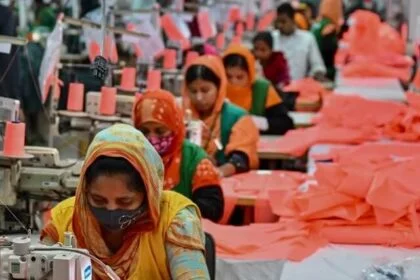

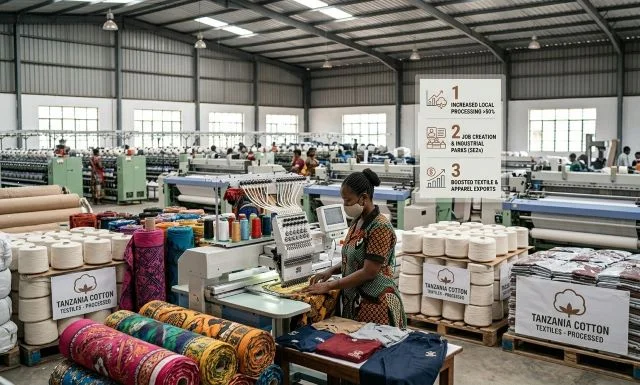
Tanzania is accelerating plans to transform its textile and apparel sector as it seeks to retain more value from its cotton industry, where over 90% of lint is exported without local processing, according to industry estimates.
The East African nation produces between 300,000 and 400,000 bales of cotton annually, but only a small share is processed domestically into yarn, fabric or garments. This has limited Tanzania’s ability to generate higher export earnings, jobs and industrial growth, despite having one of the region’s strongest cotton bases.

Officials say the country is now focusing on reversing this trend by expanding local manufacturing capacity and building an integrated textile value chain.
“We have the raw materials, but the value addition is happening outside the country,” a senior official from the Tanzania Investment Centre said, highlighting the gap between production and industrialisation.
The government’s strategy includes allocating funds in the 2026/27 national budget to develop Special Economic Zones (SEZs) and textile industrial parks aimed at attracting foreign direct investment. These zones are expected to offer tax incentives, improved infrastructure and streamlined regulations to support manufacturers.
Tanzania’s push comes as global apparel brands diversify sourcing away from traditional hubs in Asia, creating new opportunities for African producers. The country also benefits from preferential market access to the United States under the African Growth and Opportunity Act, allowing duty-free exports for eligible products.
However, Tanzania has yet to fully capitalise on this advantage. Textile and apparel exports remain relatively low compared to peers such as Kenya and Ethiopia, which have attracted significant investment into export-oriented garment manufacturing over the past decade.
Industry experts point to structural challenges that have constrained Tanzania’s progress, including high energy costs, limited access to modern machinery, and weak backward and forward linkages across the value chain.
“Without spinning, weaving and finishing capacity, cotton-producing countries cannot compete globally in textiles,” said a regional trade analyst. “Tanzania needs coordinated investment across the entire value chain.”
The government is also working with sector bodies such as the Cotton Development Trust Fund to support farmers, improve productivity and stabilise supply for domestic processors.
At the same time, efforts are underway to improve energy reliability and logistics infrastructure, both of which are critical for textile manufacturing. The sector is highly energy-intensive, and frequent power disruptions have historically discouraged large-scale investment.
Also Read: Cotton Supply Chain Risks Persist Despite Sustainability Push
If reforms succeed, Tanzania could significantly increase domestic value addition. Processing even 50% of its cotton locally could create tens of thousands of jobs and substantially boost export revenues, analysts say.
The stakes are high as African countries compete to capture a larger share of the global textile and apparel market, valued at hundreds of billions of dollars annually. With rising labour costs in Asia and shifting trade dynamics, Tanzania has a window of opportunity to position itself as a competitive sourcing destination.
Still, execution will be key. While policy direction is clear, investors will be watching closely for tangible progress in infrastructure, financing and regulatory reforms.
For now, Tanzania’s textile ambitions reflect a broader shift across developing economies, from exporting raw materials to building value-added industries capable of driving long-term economic growth.