

Bangladesh remains one of the world’s most influential players in the global apparel supply chain. Despite global economic challenges, supply chain disruptions, and evolving buyer expectations, the country continues to hold the position of the second-largest apparel exporter in the world.
According to WTO data, Bangladesh secured a 7.4% share of the global apparel market in 2023.
As per Export Promotion Bureau (EPB), the RMG sector earned USD 38.48 billion in 2024, reinforcing its position as the backbone of the national economy. Exports to non-traditional markets, including Latin America, the Middle East, and parts of Africa, reached USD 6.33 billion in 2024, showing promising diversification.

While Bangladesh’s standing remains strong, the future will demand more than basic manufacturing capacity. The global apparel industry is moving toward advanced technology, digital product development, supply chain analytics, and innovation-driven production. To stay competitive, investment in skills, technology, and market diversification must be accelerated.
Learning From Vietnam: A Model of Education–Industry Synergy
Vietnam’s textile and garment sector has made rapid progress, supported by a strong link between academic institutions and industry. One remarkable example is the Garment and Fashion Technology Training Model at Ho Chi Minh City College of Technology, highlighted by Vinatex.
In this model, students don’t only learn theory. Their classrooms extend directly to laboratories, simulation centers, and the factory floor. Training includes:
- hands-on practice using advanced industrial machines
- pattern making and CAD/CAM technology
- production planning and quality control
- internships inside real garment factories
- exposure to lean manufacturing and digital workflows
Graduates become industry-ready from day one, reducing the skill gap and ensuring factories receive well-trained professionals who adapt quickly to modern production systems.
This integrated approach has significantly strengthened Vietnam’s competitiveness, allowing the country to move into higher-value product categories and technologically advanced manufacturing.
What Bangladesh Can Learn
Bangladesh has a large workforce and strong manufacturing base, but the skill development ecosystem must evolve. The time has come to redesign the connection between universities, technical institutions, and the RMG sector.
Key priorities include:
- Closer collaboration between industry and academia, ensuring that curriculum reflects real industry needs.
- Mandatory internship programs and hands-on learning for all textile, apparel, and fashion technology students.
- Strengthening digital skills, especially in CAD, CAM, 3D design, digital sampling, automated production systems, and industrial engineering tools.
- Developing expertise in high value-added product categories such as sportswear, performance textiles, and innovative fabric technologies.
If these steps are taken seriously, Bangladesh will not only maintain its global position but also move into more competitive and sustainable segments of the apparel market.
Bunon’s Role in Bridging the Gap
For the past eight years, Bunon has been working actively with Bangladesh’s textile academia and the RMG industry. Through knowledge-sharing, discussions, training, and student–industry engagement, Bunon has consistently tried to reduce the long-standing gap between educational institutions and factories.
This journey is not only about producing skilled graduates—it is about building future leaders who can guide the industry toward innovation, sustainability, and global competitiveness.
Bangladesh stands at a crucial turning point. Strengthening human capital today will determine the nation’s industrial strength tomorrow.
About the Author
Md. Salauddin is Director of Reaz Garments Ltd, while also serving as an advisor to the Textiles and
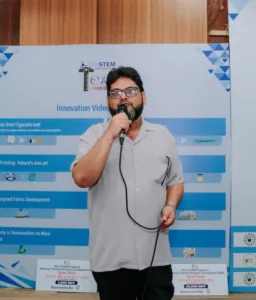
Garments Merchandise Blog Bunon, he actively contributes insights on sustainability, sourcing, and industry transformation. He is also Advisory Board Member of Fashion Business Journal.
He carries forward a remarkable legacy: his father, Mohammad Reazuddin, founder of Reaz Garments, is widely recognized as one of Bangladesh’s first ready-made garment exporters. In 1978, Reaz Garments shipped 10,000 shirts to France, a milestone that helped lay the foundation of Bangladesh’s RMG industry.
Building on this pioneering heritage, Salauddin combines deep industry knowledge with a commitment to innovation, knowledge sharing, and global competitiveness for Bangladesh’s apparel