
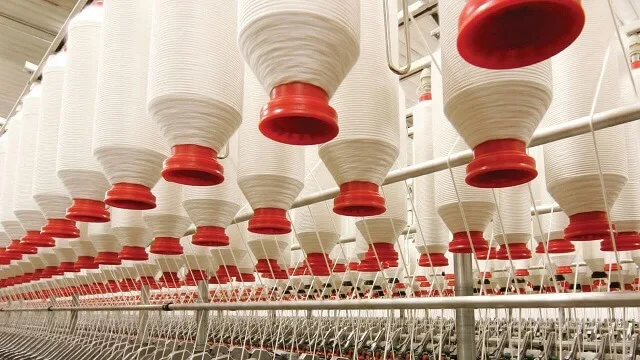
Textile recycling holds vast promise, yet scaling up the use of post-consumer textiles—especially for spinning—is far more complicated than many imagine. Stephan Weidner-Bohnenberger, in his insightful piece “Textile recycling – How to scale up with post-consumer textiles” (Nov 11, 2025), underlines that while academic research and pilot projects on recycled fibres are flowering, the practical reality of industrial production lags behind.
In the real world of spinning, fibres are not standardized. They vary enormously in length, strength, maturity, and surface characteristics, meaning that recycled materials behave very differently from virgin fibres. Weidner-Bohnenberger warns that simply mandating recycled content percentages may backfire, because textile applications demand a wide variety of performance parameters, and a “one-size-fits-all” recycled fibre will not meet them all.

Also Read: Bangladesh Apparel Faces a Great Test — by Robert Antoshak
He argues that sorting needs to become far more granular—a move from broad categories like “cotton” or “polyester” to more precisely defined fractions, such as specific garment types (for instance, hospital bed-sheets or workwear), to create more homogeneous recycled batches. Only with such consistency can recycled fibres become tradeable feedstock. Without a shared system to declare key fibre properties, spinners cannot reliably blend or work with them.
Weidner-Bohnenberger suggests borrowing from the virgin fibre trade, where bales come with simple lab reports on parameters like fibre strength and length; in the recycled world, a similar reporting system could make fibres comparable and tradable, incentivizing higher-quality recycling.
Another fundamental issue is that post-consumer mechanically recycled fibres often suffer from significantly shorter fibre lengths and altered surface properties due to mechanical tearing and previous finishing. As Weidner-Bohnenberger describes, recycled fibres typically need to be blended with virgin material, and the spinning process adjusted—more twist, different densities—to compensate for strength and evenness. Some differences, like residual dye, bleaching effects, or changes in texture, can remain, making high-precision products (fine yarns, sensitive technical textiles) difficult to produce purely from recycled content.
Also Read: Sustainability Only Works When It’s Measurable
Empirical research supports this: studies have shown that up to about 25 percent of recycled cotton fibres (from pre- and post-consumer sources) can be blended with virgin cotton to create medium-count ring-spun yarn.
However, the yarns exhibit higher variability (e.g., greater mass variation) and lower strength than those spun entirely from virgin fibres.
Other industrial observations confirm that short-fibre-rich recycled material is less suited for ring spinning, though rotor spinning machines can handle higher proportions.
Infrastructure and economic factors remain major barriers as well. Scaling fibre-to-fibre recycling entails not only better sorting but also removing non-textile contaminants like buttons and zippers, which is costly.
Moreover, a significant fraction of mechanically recycled textiles ends up as “fluff” too short to spin; according to recent life-cycle analyses, only about 5–20 percent of input textile material can be recovered as spinnable fibre.
Contaminants and chemical residues (e.g., dyes or REACH-listed substances) must also be screened early, to ensure recycled fibre quality and safety. As Weidner-Bohnenberger suggests, traceability and cooperation across sorting, recycling, and spinning businesses are essential—not just to meet environmental goals, but to make recycling economically viable.
He also cautions against overreliance on chemical recycling. While chemical recycling can restore fibre length and purity, it often carries higher environmental costs (energy, water, chemicals) and tends to produce man-made fibres (e.g., recycled polyester or viscose) that differ substantially from natural fibres in feel and performance. Weidner-Bohnenberger’s view is that any policy pushing mandatory recycled content must take account of those real trade-offs: recycled content only works when it aligns with what spinners can reliably process.
In the bigger picture, Weidner-Bohnenberger sees a path forward in pragmatic collaboration among spinners, recyclers, sorters and brands. They must jointly test, refine, and gradually standardize declarations for recycled fractions. Over time, tradition-driven naming systems (as in cotton trading) could evolve for recycled fibres too.
With experience, consistency, and shared terminology, recycled material can become a full-fledged, economically sound feedstock—and not just an aspirational sustainability goal. The challenge is not only to make recycling possible, but to embed it in the industrial fabric in a way that is predictable, tradeable, and aligned with spinning realities.