

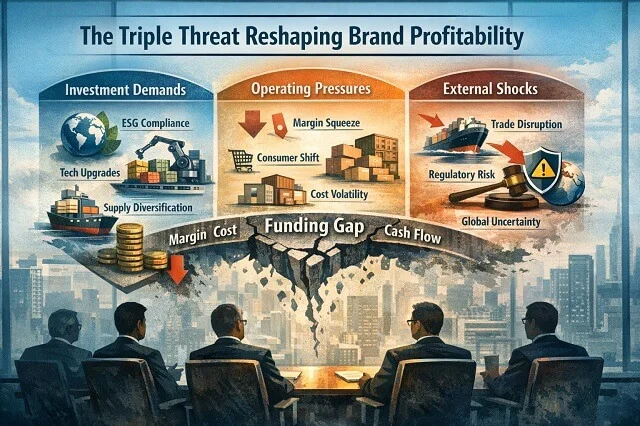
Brands today face a “triple threat” that is reshaping the industry landscape. This threat consists of rising investment demands, deteriorating operating fundamentals, and external shocks. Increasing pressure to diversify supply chains, comply with ESG standards, and modernize technology comes at a time when consumers are more promotion-driven, pricing power is weakening, and margins and cash flow are tightening. These simultaneous challenges create a structural funding gap, particularly affecting mid-tier and challenger brands.
Boards are now grappling with a fundamental question: not what needs to be done, but whether the industry can realistically fund these necessary changes without destroying profitability. Investment pressure is peaking at the worst possible moment. Brands are expected to invest heavily in diversification, ESG compliance, and automation just as market conditions make it harder to maintain pricing power and margins.

Margin, cost, and cash management have become top priorities at the board level. Executives report that sourcing costs driven by tariffs and trade frictions, inventory volatility and overstock risks, and the need for technology overhauls—including automation and systems integration—are significant pressures. These combined costs have triggered heightened concern about capital allocation and returns on investment among decision-makers.
Also Read: Why Bangladesh Remains a Global Apparel Powerhouse in 2025
The industry is also experiencing a growing divide. Large brands with scale, strong balance sheets, and internal capabilities can absorb these shocks more easily. Meanwhile, smaller players are increasingly pushed toward hybrid operating models that rely on third-party providers, shared infrastructure, and outsourced technology solutions. This trend points toward a consolidation of capabilities within the industry, even if individual brands remain independent.
The broader market context adds urgency to these challenges. While UK inflation is easing slightly, helped by cheaper Chinese imports, China’s $1.2 trillion trade surplus indicates exports are being rerouted rather than reduced—shifting away from the US toward Europe, ASEAN, Africa, and Latin America. Higher-end Chinese exports are increasing, while low-end goods are declining, intensifying competition in value-added categories. Meanwhile, softer-than-expected US inflation suggests tariffs are slower to impact prices, leaving room for potential rate cuts. Overall, macroeconomic pressures may be easing somewhat, but competitive and cost pressures are intensifying.
Strategically, the industry must face the reality that the funding problem is real. Investments in diversification, ESG, and technology cannot be expected to pay for themselves quickly enough, making cash discipline as critical as growth strategy. Hybrid operating models involving shared services and outsourced platforms are becoming inevitable for all but the largest brands. Execution matters more than ambition; these initiatives are essential but must be implemented in ways that protect margins and working capital. Boards will prioritize survivability over perfection, favoring phased rollouts, delayed initiatives, and ruthless scrutiny of return on investment.
In summary, brands must navigate this triple threat carefully to ensure they remain competitive and financially healthy in a rapidly evolving market.