
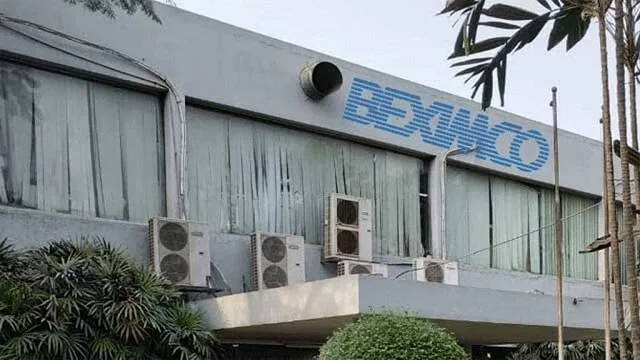
The planned reopening of BEXIMCO Textile Division by Japanese-Bangladeshi REVIVAL Group highlights significant financial challenges ahead, with estimated operating expenses pegged at Tk 1 billion per month for the initial three months.
Officials from Beximco have indicated that after restarting operations, the textile unit could generate annual repayments of up to Tk 4.5 billion to banks, excluding ongoing operating costs. This projection underscores the delicate balance between resuming production and managing the heavy financial burdens tied to the factory’s revival.

BEXIMCO Textile, once a powerhouse in Bangladesh’s garment industry employing over 25,000 workers, was shut down following loan defaults after more than three decades of operation. The closure not only displaced thousands of workers but also triggered economic ripple effects across surrounding communities and small businesses.
Also Read: Pacific Jeans Restart Marks Recovery in Bangladesh’s Export Sector
Adding complexity to the revival effort is a government investigation revealing that, while 32 factories were listed under Beximco Industrial Park, only 16 were found to be operational. The probe uncovered that loans amounting to Tk 120 billion were taken out under the names of 16 non-existent companies during the previous Awami League government. Overall, loans totaling Tk 299.25 billion were issued under the names of the 32 companies in the industrial park.
The loan defaults have now reached Tk 350 billion, with Tk 230 billion owed to Janata Bank alone. Among the 16 existing companies, 11 were in the textile and apparel sector. These factories experienced layoffs until January, after which they remained closed.
The REVIVAL Group, in partnership with US-based financing firm Ecomilli, has proposed a lease agreement to restart BEXIMCO Textile. The draft agreement was submitted to Janata Bank on October 8, with a formal signing expected within weeks.
REVIVAL plans to invest $20 million initially to support back-to-back letters of credit, potentially scaling up to $100 million based on factory performance and global demand. Production is expected to resume by December 2025, aiming to restore jobs for more than 25,000 workers.
Despite the optimistic outlook, the financial realities remain daunting. Abdul Qayyum, Beximco Group Head of Administration, estimated that the factory would require Tk 1 billion monthly to cover operating expenses at reopening, with the potential to repay bank loans of Tk 4.5 billion annually thereafter, excluding those costs.
The Ministry of Labour and Employment, along with Bangladesh Bank and Janata Bank, has been actively coordinating policy support to facilitate the factory’s revival, prioritizing employment and financial restructuring.
BEXIMCO’s managing director Osman Kaiser Chowdhury said the company had strived to keep the textile division operational until government-mandated shutdown, preserving machinery to enable a swift restart.
With Japanese management expertise and US financial backing, REVIVAL Group aims to re-establish BEXIMCO Textile as a symbol of industrial renewal, reconnecting it with global buyers and advancing Bangladesh’s position as a hub for premium fashion manufacturing.
BEXIMCO Textile previously supplied major global retailers including Zara, Marks & Spencer, Target, American Eagle, Pull & Bear and Bestseller.