
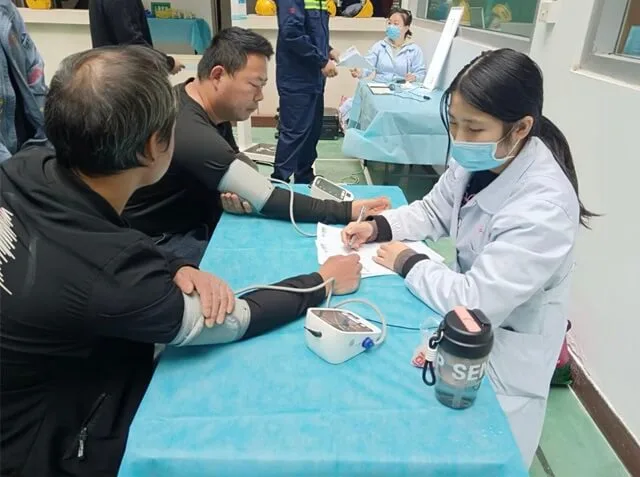
In a move underscoring its commitment to employee welfare, Transfar Chemicals recently launched a comprehensive on-site health checkup for its frontline production workers, particularly those exposed to potentially hazardous chemicals.
The company brought in a fully equipped medical screening bus directly to its production facility, ensuring minimal disruption to work schedules while maximizing accessibility for staff. The screenings included chest X-rays, liver function tests, and lung function assessments — tests specifically tailored to capture occupational health risks associated with chemical exposure.

Also Read: Sustainability Only Works When It’s Measurable
On-site medical personnel were available throughout the day to explain risks, answer workers’ questions, and offer guidance on preventative measures.
“Health is at the heart of everything we do,” said a senior Transfar executive. “Our goal is not just to comply with regulations but to genuinely protect our people, and make sure they know how deeply we care.”

This initiative comes at a time when worker safety in Bangladesh’s chemical sector is under increasing scrutiny. Occupational health experts have long warned that many chemical workers face serious long-term health risks, with hazardous exposures contributing to respiratory illness, liver damage, and other chronic conditions.
Chemical management in the country has also been identified as a priority for both environmental and health sustainability. Experts at a recent roundtable emphasized the need for stronger chemical-use protocols in industrial sectors — not only to reduce pollution, but to protect worker health and reduce operational costs.
Also Read: “DPP will reshape the entire supply chain — we must be ready”
Transfar’s health screening campaign may serve as a model for other companies in Bangladesh’s chemical and industrial sectors, where regular medical monitoring is often limited. It also aligns with national guidelines: the Ministry of Labour’s safety-committee handbook highlights the importance of risk assessment, monitoring, and preventive healthcare in chemical-using facilities.
As Transfar continues to prioritize worker well-being, the company says it hopes to build a workplace culture rooted in trust, care, and long-term health — reinforcing the notion that when employees thrive, the company thrives too.