

Consumer confidence in the United States has taken a noticeable hit following the onset of military tensions involving Iran, according to the latest survey from the University of Michigan.
Joanne Hsu, Director of the Surveys of Consumers, reported that overall consumer sentiment fell by 6% in March, reaching its lowest level since December 2025. The decline was broad-based, affecting people across different age groups, income levels, and political affiliations.

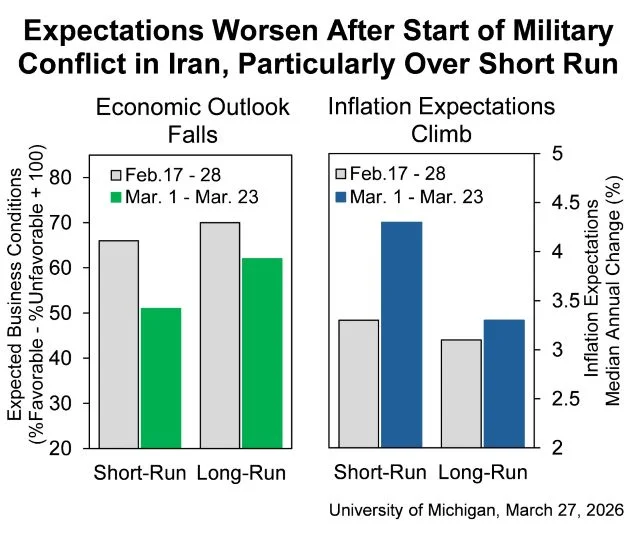
The data shows that short-term concerns are driving most of the pessimism. The short-run economic outlook dropped sharply by 14%, while expectations for personal finances over the next year fell 10%. In contrast, long-term expectations declined only slightly—suggesting that many consumers still believe the downturn may be temporary.
Also read: China May Avoid Worst Iran War Oil Shock, Analysts Say
Rising fuel costs and volatile financial markets linked to the geopolitical situation appear to be key factors behind the shift. Middle- and higher-income households, particularly those with stock market exposure, reported the steepest drops in confidence.
At the same time, inflation worries are intensifying. Year-ahead inflation expectations jumped from 3.4% in February to 3.8% in March—the biggest monthly increase since April 2025. This level is higher than anything seen in 2024 and remains above the pre-pandemic norm of roughly 2.3% to 3.0%.
However, longer-term inflation expectations edged slightly down to 3.2%, staying within the range seen over the past year.
The survey, conducted between February 17 and March 23, captures a clear shift in sentiment after the conflict began, highlighting how quickly geopolitical events can influence economic perceptions. Analysts note that if the situation escalates or energy prices continue rising, both sentiment and inflation expectations could worsen further.