

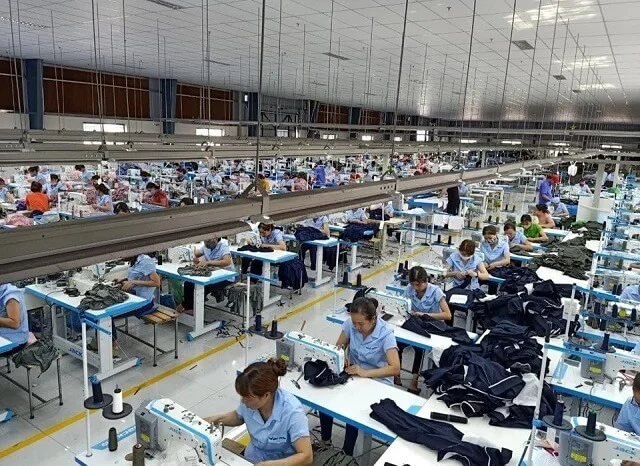
Vietnam’s textile and garment industry is undergoing a strategic realignment in 2026, shifting away from large-volume contract manufacturing toward smaller, higher-value orders that require greater technical precision and value-added services, according to the Vietnam Textile and Apparel Association (VITAS).
Industry leaders, including VITAS Chairman Vu Duc Giang, have signaled that Vietnam will focus on segments of the global market where design complexity, customization, and technical standards define competitiveness rather than simply scale and price.

Also Read : Arvind Fashions Taps Amitabh Suri to Lead Flying Machine in Strategic Reset
This change reflects broader pressures in international sourcing particularly from key markets like the United States, Japan and the European Union, where buyers increasingly demand quality, traceability and sustainability.
In practical terms, this means Vietnamese firms are producing more tailor-made and high-value products such as custom-fit apparel for Western buyers and less on mass production for basic, low-margin orders.
This strategic orientation comes amid challenging market conditions: global demand for textile and garments is expected to grow only modestly in 2026, roughly 3%, which is a significant slowdown from previous years. Meanwhile, production costs including wages, energy and logistics continue to rise faster than selling prices, squeezing profit margins across the industry.
Also Read : German sustainable fashion label Armedangels to join ZDHC as signatory friend
Experts within the Vietnam Textile and Garment Group (Vinatex) warn that tariff pressures and cost absorption limits for retailers and suppliers are reaching a tipping point in 2026, further underscoring the need for higher-value production and more flexible, resilient supply chains.
Vietnam’s textile and garment sector has posted steady growth in recent years — with export revenues expected to hit about US$46 billion in 2025 and the industry maintaining a significant trade surplus yet it remains heavily dependent on imported raw materials and basic processing.
While Vietnam is now one of the world’s top exporters of textile and garment products, supplying to nearly 140 countries, much of the value still lies in downstream processing rather than upstream design, branding and finished-goods innovation.
The industry is responding in part with digital transformation initiatives and investments in automation, vocational training and smarter factory systems — moves that may ease the transition toward higher-value segments over the medium term
Vietnam’s shift also occurs within a broader backdrop of intensifying global competition. Countries like China and India continue to exert pressure in basic garment exports, while Bangladesh remains competitive in low-cost mass production.
At the same time, Vietnam’s expanding network of free trade agreements and strong export performance in premium markets particularly the U.S. and Japan provide structural support for this strategic pivot.