
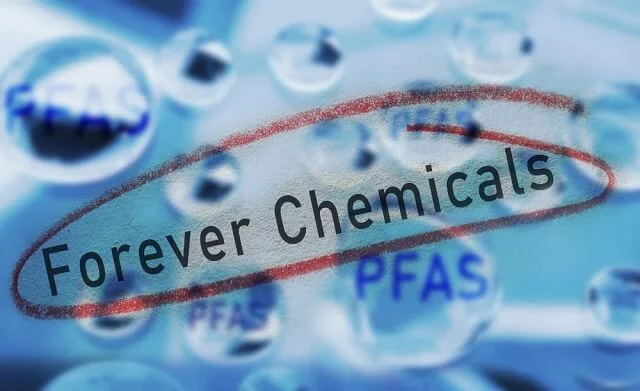
France has formally implemented its long-anticipated national ban on per- and polyfluoroalkyl substances (PFAS) in textiles and footwear, with the regulation taking effect on January 2026.
The measure applies strictly to new textile and footwear products placed on the French market, while explicitly exempting second-hand garments from its scope a move designed to balance chemical risk reduction with circular economy objectives.

Under the newly published government decree, PFAS restrictions cover a wide range of new consumer products, including apparel, footwear, and waterproofing and stain-repellent treatments, all of which must comply with defined concentration thresholds.
The regulation also sets out sector-specific exemptions and transitional timelines, allowing certain technical or protective uses to be phased out gradually where immediate substitution remains challenging.
Crucially, the decree allows used and legacy garments containing PFAS—including items treated with water-, oil-, or stain-resistant finishes—to continue circulating within France’s second-hand market.
Also Read : Capturing High-Margin Fashion: Bangladesh’s Strategy
This carve-out permits resale, donation, reuse, and export of second-hand PFAS-treated textiles, preventing an abrupt disruption to resale platforms, charity shops, and textile reuse operators.
French authorities acknowledged that extending the ban to second-hand clothing at this stage could undermine sustainability goals by forcing the premature disposal of millions of garments, significantly increasing textile waste.
Given the widespread historical use of PFAS in outdoor wear, uniforms, and performance apparel, regulators determined that a blanket restriction on resale would conflict with national and EU-level commitments to waste reduction, reuse, and extended product life cycles.
While PFAS are increasingly recognised for their persistence and potential health and environmental impacts, regulators are seeking pragmatic transition pathways that avoid penalising circular business models while still driving innovation in safer alternatives.
Also Read : Indonesia’s Asia Pacific Rayon Maps Out 10-Year Sustainability Drive
For brands and manufacturers, the implications are clear. While legacy products may remain legally tradable through second-hand channels, all new products entering the French market must now meet stricter chemical compliance standards.
Industry observers note that brands supplying France—and by extension the wider European Union—will face growing scrutiny around chemical disclosure, traceability, and the adoption of PFAS-free materials in future collections.
For global apparel exporters, including suppliers in Bangladesh and other major manufacturing hubs, the decree highlights the importance of separating compliance strategies for new product placements versus resale and reuse markets. Companies that proactively invest in PFAS-free finishes, alternative performance technologies, and transparent chemical management systems are expected to gain a competitive advantage as Europe accelerates its transition away from “forever chemicals.”
Overall, France’s approach signals a phased but firm regulatory direction: new PFAS-containing textiles are being progressively eliminated, while existing garments are allowed to circulate responsibly—at least for now—within a framework that prioritises both environmental protection and circular economy principles.