

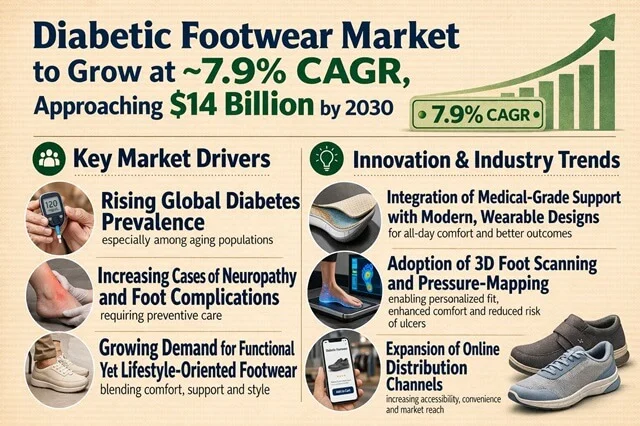
The global diabetic footwear market is steadily advancing as healthcare priorities and consumer expectations converge, with industry estimates indicating a compound annual growth rate of around 7.9% and a projected value nearing $14 billion by 2030.
Insights from firms such as Allied Market Research and Grand View Research point to a consistent upward trajectory, supported by long-term structural drivers rather than short-term demand spikes.At the center of this expansion is the growing global prevalence of diabetes, which continues to rise across both developed and emerging economies.

As complications such as neuropathy, poor circulation, and foot ulcers become more common, preventive care is gaining importance, placing diabetic footwear in a critical role within treatment pathways. These products are specifically engineered to reduce pressure points, improve circulation, and minimize injury risks, making them increasingly recommended by healthcare professionals as part of routine diabetes management.
The market is also benefiting from demographic shifts, particularly the rapid growth of aging populations. Older consumers are more vulnerable to chronic conditions and mobility issues, driving demand for footwear that combines medical functionality with everyday comfort. This trend is especially visible in Asia-Pacific, where expanding elderly populations and rising healthcare awareness are accelerating adoption.
Also Read : ECCO Launches BIOM 720 with Spinnova Fibre
A notable transformation within the industry is the shift from purely medical products to lifestyle-oriented footwear. Manufacturers are investing in design innovation to overcome the long-standing perception of diabetic shoes as bulky or unattractive.
Modern offerings emphasize aesthetics alongside performance, enabling consumers to integrate therapeutic footwear into daily life without compromising on style. This evolution is particularly significant in the women’s segment, where demand for visually appealing yet medically effective footwear is rising.
Technological advancements are further reshaping the competitive landscape. Companies are increasingly incorporating digital tools such as 3D foot scanning and pressure-mapping technologies to deliver customized fits. At the same time, innovations in material science and sole engineering are enhancing durability, flexibility, and comfort. These developments are gradually shifting the market toward personalized solutions, aligning with broader trends in health-tech and wearable innovation.
Distribution channels are evolving in parallel. While specialty stores and medical outlets continue to play a key role, e-commerce is rapidly expanding its share by improving accessibility and consumer convenience. Online platforms are enabling brands to reach underserved markets and offer a wider range of products, particularly in regions where physical retail infrastructure remains limited.
Also Read : Skechers AERO Razor Redefines Speed Running at Lower Cost
Regionally, North America maintains its leadership position due to advanced healthcare systems, strong awareness, and established reimbursement frameworks. However, Asia-Pacific is emerging as the fastest-growing market, driven by increasing diabetes prevalence, urbanization, and rising disposable incomes.
This shift underscores the global nature of the opportunity and highlights the importance of regional strategies for manufacturers.
Despite its strong growth outlook, the market faces challenges related to affordability and awareness. High production costs associated with specialized designs can limit access in lower-income regions, while a lack of awareness about diabetic foot care continues to hinder early adoption. Addressing these barriers will be crucial for unlocking the market’s full potential.
In fine, the diabetic footwear segment is set to become an increasingly important part of the global footwear industry. As the focus of healthcare systems shifts toward prevention and quality of life, demand for functional, therapeutic, and technology-enabled footwear is expected to rise steadily.
For industry players, success will depend on their ability to integrate medical expertise with consumer-driven design, ensuring that innovation translates into both clinical value and market appeal.