
France’s flagship “anti-fast fashion” legislation has run into a major regulatory roadblock after the European Commission warned that the proposed law conflicts with EU single market rules, digital trade regulations, and emerging bloc-wide sustainability frameworks, raising fresh questions over how Europe will govern the rapidly growing ultra-fast fashion industry.
The proposed law, known as Loi Violland, was designed to curb environmental damage and overconsumption driven by low-cost, high-volume fashion platforms. It includes provisions for environmental surcharges of up to €10 per item by 2030, strict advertising restrictions targeting ultra-fast fashion companies, and mandatory environmental impact disclosures for retailers operating in France.

However, in a formal reaction issued on April 15, the European Commission said key elements of the law were “incompatible with Union law,” arguing that it risks fragmenting the EU’s single market and contradicting established e-commerce regulations.
At the center of Brussels’ concern is the “country of origin” principle, a cornerstone of EU digital services law. Under this framework, online platforms are primarily regulated by the member state in which they are established, not by each country where their services are accessed.
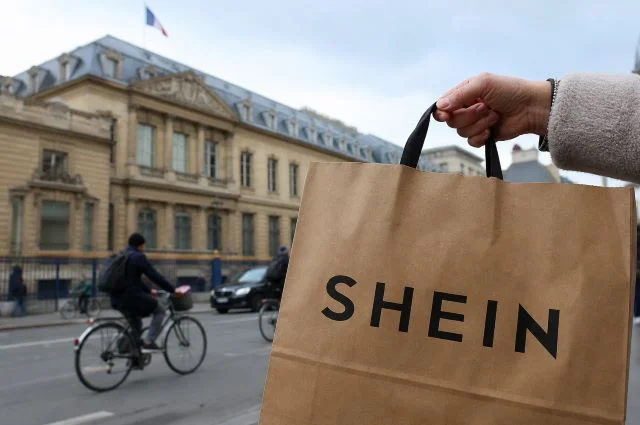
The Commission warned that France’s attempt to impose advertising bans and penalties on companies headquartered in other EU jurisdictions, such as Ireland, where major platforms including Shein and Temu operate their European businesses could exceed national legal authority.
Also Read: France Passes Law to Curb Ultra-Fast Fashion Platforms Like Shein and Temu
EU officials also cautioned that France’s unilateral approach risks undermining broader bloc-wide regulatory initiatives already under development, including the Ecodesign for Sustainable Products Regulation and the forthcoming Digital Product Passport system. These initiatives aim to harmonize sustainability standards across the 27-member bloc, particularly in high-impact sectors such as textiles.
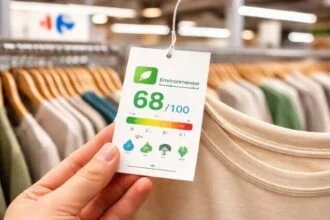
The Commission warned that France’s proposed “eco-score” labeling system and financial penalties could create regulatory fragmentation, potentially leading to inconsistent obligations for companies operating across multiple EU markets. Industry analysts say such divergence could increase compliance costs and complicate cross-border e-commerce logistics at a time when the EU is attempting to streamline digital trade rules.
Despite the setback, French policymakers have defended the law as a necessary response to the environmental and social pressures created by ultra-fast fashion. Paris has been among the most vocal critics of the sector, arguing that its low-cost, high-volume business model drives excessive textile waste, carbon emissions, and unfair competition against European manufacturers.
Named after French politician Anne-Cécile Violland, the bill was unanimously approved by France’s National Assembly in 2024 and later passed by the Senate in 2025, reflecting rare cross-party consensus on the need for stricter regulation of the sector. The law also reflects France’s broader effort to position itself as a leader in sustainable fashion regulation within the EU.
The political momentum behind the legislation has also been fueled by public and regulatory backlash against fast fashion platforms. In late 2025, scrutiny of Shein intensified in France following a controversy involving listings of inappropriate products, including “childlike” sex dolls and illegal weapons on its platform. The company, which has been expanding its physical retail presence in Europe, faced heightened political pressure as a result.
French customs authorities further escalated concerns after inspections of 320,000 parcels linked to the company at Charles de Gaulle Airport revealed a 25% non-compliance rate with EU product safety and regulatory standards. The findings prompted French authorities to pursue legal action seeking a temporary suspension of the platform’s operations in the country.
The dispute now places France at odds with Brussels at a time when the EU is attempting to balance industrial competitiveness with environmental ambition. While member states increasingly support sustainability-driven reforms, there is growing resistance within the Commission to fragmented national regulations that could distort the internal market.
Legal experts say the standoff underscores a broader tension in EU governance: how far individual countries can go in implementing aggressive environmental policies without undermining harmonized rules across the bloc. If unresolved, the disagreement could delay France’s implementation of the law or force significant revisions to align it with EU legal standards.
For now, Loi Violland remains in regulatory limbo, highlighting the difficulty of translating Europe’s climate ambitions into enforceable national policy in a deeply integrated single market.
As negotiations continue between Paris and Brussels, the future of France’s anti-fast fashion framework and potentially similar initiatives across Europe will depend on whether a compromise can be reached between national urgency and supranational legal coherence.