

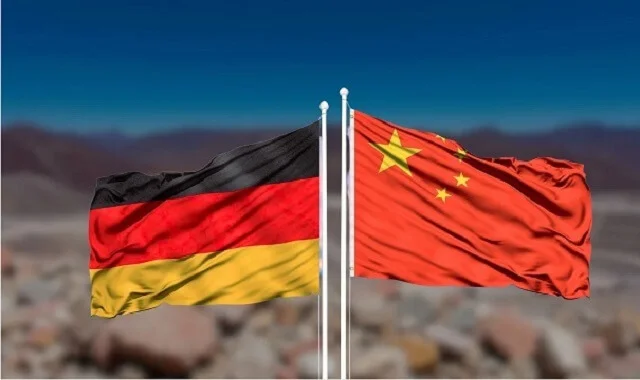
China has regained its position as Germany’s largest trading partner in 2025, underscoring the resilience of bilateral supply chains despite ongoing European efforts to reduce dependence on Chinese imports.
Data released by Germany’s federal statistics office, Destatis, showed total trade between Germany and China reached €251.8 billion ($297.1 billion) last year. The figure was enough to push China back ahead of the United States, whose trade with Europe’s largest economy declined to €240.5 billion.

China had dominated Germany’s trade rankings from 2016 through 2023 before briefly losing the top spot to the United States in 2024. The latest data highlights how deeply embedded Chinese supply chains remain in German industry, even as policymakers in Berlin and Brussels promote “de-risking” strategies.
The rebound was driven primarily by stronger German imports from China rather than a surge in exports. German manufacturers continue to rely heavily on Chinese intermediate goods, electronics components, machinery parts and consumer products. Analysts say this structural dependence makes rapid diversification difficult.
Trade with the United States, by contrast, weakened amid softer demand and slower industrial momentum. The decline in transatlantic trade volumes reflects cooling goods demand and inventory adjustments in key U.S. sectors, according to trade observers.
Within Europe, the Netherlands remained Germany’s third-largest trading partner, with bilateral trade rising 3.3% year on year to €209.1 billion. The country’s role as a major logistics hub for EU imports continues to support its strong ranking.
Also Read: Trump Imposes New Global 10% Tariff After U.S. Duties Ruled Illegal
For the textile and apparel sector, the latest figures reinforce China’s continuing importance in European fashion supply chains. Germany is one of the European Union’s largest apparel markets, and its import structure influences sourcing patterns across the region. The data suggests that while European brands are exploring supplier diversification, particularly toward South and Southeast Asia, the shift remains gradual.
Industry experts note that China retains significant advantages in scale, infrastructure, vertical integration and speed to market. These factors continue to anchor its position in higher-value textiles, technical fabrics and complex apparel inputs, even as basic garment production expands in countries such as Bangladesh and Vietnam.
The trade dynamics also carry implications for sourcing strategies among EU fashion brands. Many companies have adopted a “China+1” approach to reduce concentration risk, but the latest German trade figures indicate that China remains deeply embedded in upstream supply chains, especially for materials and components.
Looking ahead, economists expect Germany’s trade rankings to remain fluid as geopolitical tensions, EU industrial policy and global demand cycles evolve. Energy costs, manufacturing competitiveness in Europe and shifting consumer demand in major markets will all play a role in shaping future trade flows.
Even so, the 2025 data delivers a clear signal: despite political momentum toward supply chain diversification, economic ties between Germany and China continue to demonstrate strong structural resilience.