
African cotton is steadily shifting from a niche sustainability story to a mainstream sourcing solution, as Cotton made in Africa (CmiA) rapidly expands its international traceability system in response to tightening regulations and changing buyer expectations.
The Hamburg-based Aid by Trade Foundation (AbTF), which operates the CmiA standard, has significantly widened its global supply chain footprint. Its physically traceable cotton system now links around 700 suppliers, textile manufacturers, and brands across 25 countries, which is more than double the size of its network a year ago.
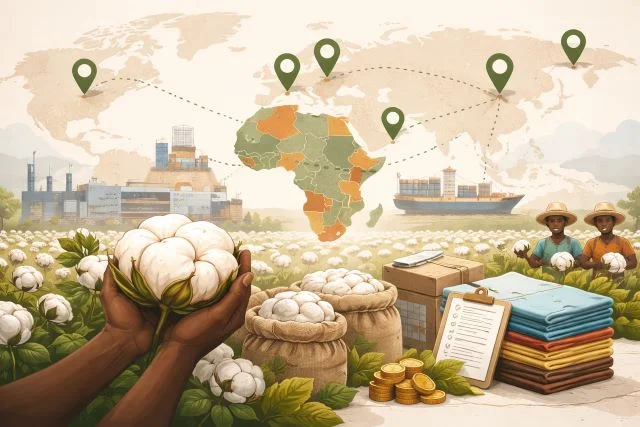
The programme integrates cotton grown in several sub-Saharan African countries into manufacturing supply chains that span Europe and Asia. The growth reflects a deeper transformation underway in the textile sector. Traceability is no longer viewed as a marketing advantage but as a structural requirement tied to compliance, risk management, and investor scrutiny.
In major consumer markets, particularly the European Union, companies face increasing obligations to verify fibre origin, labour standards, and environmental performance throughout their supply chains. According to programme data, approximately 33,000 metric tons of physically traceable CmiA cotton have already been processed into nearly 190 million finished textile products.
On average, one metric ton of cotton can produce between 5,500 and 6,000 T-shirts depending on fabric weight and yarn specification, underscoring the commercial scale at which traceable African fibre is entering global retail markets.
Globally, annual cotton production stands at roughly 25 million metric tons. Africa contributes about 7–8 percent of that output. CmiA-certified cotton has in some seasons accounted for nearly 10 percent of African production, positioning the initiative among the continent’s largest structured sustainability frameworks.
The CmiA model is based on physical traceability through its Hard Identity Preserved (HIP) chain-of-custody system. The HIP approach requires cotton to remain segregated and documented from bale to yarn, fabric and finished garment. Each transaction in the supply chain must be recorded to maintain the integrity of the traceability claim.
“As a standards organisation, our mission is to ensure transparency throughout global supply chains,” says Tina Stridde, Managing Director of the Aid by Trade Foundation. “The physical traceability of Cotton made in Africa cotton is very important for textile companies and fashion brands. It ensures that social and environmental criteria are adhered to during cotton production and that customers can make informed purchasing decisions. It also prevents greenwashing because audits create full transparency that the verified cotton is used.”
Major European retailers, including Bestseller, Otto Group, OVS, Primark, and REWE Group, are already marketing products containing CmiA cotton. Collectively, leading European apparel groups operate more than 10,000 retail outlets globally, giving traceable African cotton significant commercial visibility.
The REWE Group recently announced it had achieved full traceability of Cotton made in Africa cotton used in its private label products by the end of 2025. “We were able to fully trace the Cotton made in Africa cotton used in our private label products back to its origin,” says Torsten Stau, Executive Buying Director Non-Food / Indirect Spend at REWE Group. “The transparency system enables us to clearly prove origin and ensure the cotton comes from African small-scale farmers who produce under recognised social and environmental standards.”
Industry analysts estimate that implementing advanced traceability systems can initially increase operational costs by approximately 1–3 percent, depending on digital infrastructure and auditing requirements. However, suppliers that meet traceability standards may secure preferred supplier status and long-term contracts with global buyers managing sourcing budgets worth billions of dollars annually.
The regulatory push is accelerating this shift. The European textile and clothing market is valued at over €180 billion per year, and the EU imports more than €100 billion worth of apparel annually. Emerging due diligence regulations and digital product passport initiatives are pushing brands to maintain detailed records of material origin and environmental impact.
Beginning in March 2026, CmiA’s Transparency Standard will become mandatory for partners seeking to verify that their products contain CmiA cotton. The system integrates digital transaction documents (DTDs) with risk-based desktop audits conducted by independent, ISO-accredited firms. Even small discrepancies in bale volumes or processing records can invalidate a traceability claim, reinforcing the need for real-time, accurate documentation.
Beyond cotton, the Aid by Trade Foundation plans to extend similar transparency mechanisms to other raw materials, including cashmere verified under The Good Cashmere Standard from 2027.
Cotton accounts for roughly 24 percent of global fibre consumption, second only to polyester. As sustainability scrutiny intensifies and global sustainable finance assets exceed $30 trillion, investors are incorporating supply chain transparency into ESG assessments. Companies unable to demonstrate verified sourcing may face higher compliance risks and reputational exposure.
Also read: Diversifying Beyond Oil: Azerbaijan’s Cotton Challenge
At the farm level, CmiA connects international retail demand with around one million small-scale African farmers and their families. Typical farm sizes range between 1 and 5 hectares, with average yields in sub-Saharan Africa estimated at 400–800 kilograms per hectare. Incremental yield improvements and secure market access can significantly affect household incomes.
With nearly 190 million traceable textile products already in circulation and a rapidly expanding global supplier network, CmiA’s growth highlights how fibre transparency is becoming embedded in the economics of apparel trade. As the $1.5 trillion global fashion market adapts to stricter compliance frameworks, the ability to verify cotton origin from field to shelf is emerging as a defining competitive factor.