
Bangladesh’s leather industry is once again grappling with a familiar paradox: an abundance of raw materials following Eid-ul-Adha, but persistent failure to translate that supply into higher earnings, exposing deep-rooted structural inefficiencies in the sector.
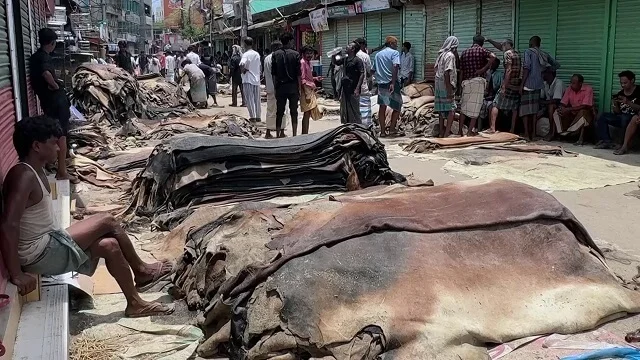
The annual Islamic festival, which involves the sacrifice of millions of animals, provides up to 60% of the country’s total rawhide supply. This year was no exception, as hundreds of thousands of animal skin flowed into collection points and the Savar Tannery Industrial Estate within hours of Eid celebrations.

Yet despite the surge in supply, prices at the grassroots level remained depressed. Traders and sellers reported that cowhides were sold for as little as Tk600–700 per piece in some areas, significantly below expectations and often lower than the government’s indicative pricing. The mismatch between official rates and actual transactions once again left small sellers—including households and religious institutions—bearing the brunt of market volatility.
Industry stakeholders say the problem is not new. Rather, it reflects a systemic failure that begins at the point of collection and extends across the entire value chain. Read Here
A key constraint this year has been limited access to financing. Commercial banks, wary of high default rates in the leather sector, have reduced seasonal lending, leaving traders and tannery owners short of working capital during the peak procurement period. Without sufficient liquidity, buyers are unable to purchase hides at scale, forcing sellers into distress sales and driving prices downward.
Compounding the issue is poor preservation infrastructure. In many parts of the country, rawhides are inadequately salted or stored, leading to rapid deterioration in quality—sometimes within hours. Experts say a significant portion of hides loses export-grade value before reaching tanneries, resulting in substantial economic losses.
“Value erosion starts almost immediately after collection,” said an industry insider. “By the time the leather reaches processing facilities, much of its potential has already been lost.”
The challenges do not end there. Bangladesh continues to export a large share of its leather in semi-processed forms such as wet blue or crust leather, which fetch lower prices in global markets compared to finished goods like footwear, bags and accessories. This limits the country’s ability to move up the value chain and capture higher margins.
Also Read: Bangladesh’s Leather Sector Struggles to Unlock Its Full Export Potential
At the same time, the sector remains heavily dependent on a narrow set of export destinations, particularly China. This concentration reduces pricing power and exposes exporters to fluctuations in external demand, further constraining profitability.
Government efforts to stabilize the market—including setting price guidelines and distributing salt for preservation—have had limited impact due to weak enforcement and logistical gaps. As a result, the same cycle of oversupply, price collapse and value loss continues to repeat each year.
Economists and industry experts argue that Bangladesh’s leather sector holds significant untapped potential. With proper investment in preservation, logistics, compliance and value-added manufacturing, the industry could emerge as a major export engine, complementing the country’s dominant ready-made garment sector.
However, without structural reforms, the outlook remains constrained. The post-Eid 2026 scenario underscores a critical reality: increasing supply alone is not enough to drive growth.
Instead, the sector needs coordinated intervention—improved access to finance during peak seasons, modern storage and processing facilities, diversification of export markets, and a strategic shift toward finished leather goods.
Until then, Bangladesh risks continuing to operate as a supplier of low-value raw materials rather than a competitive player in the global leather industry.
The events following Eid-ul-Adha this year serve as a stark reminder that the country is not short of opportunity—but is still struggling to capture its full economic value.