
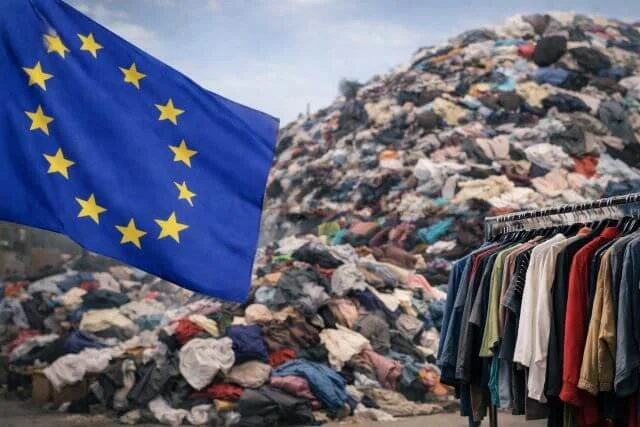
More than 60 European and French civil society organisations urged the European Commission not to block a French draft law aimed at tackling rampant overproduction in the fashion industry, saying the measure is vital to curb waste and strengthen textile producer responsibility.
In an open letter, the groups backed Paris’s proposal to toughen Extended Producer Responsibility (EPR) rules under the EU’s revised Waste Framework Directive, which requires member states to fund the cost of discarded textiles and allows fee modulation based on product volume and design for environmental impact.

France’s draft law would go further, imposing higher fees on commercial practices that drive overproduction, a move supporters argue is necessary to address excess supply and the growing surge of unsold clothes, straining sorting and resale systems across Europe.
Read More: France Passes Law to Curb Ultra-Fast Fashion Platforms Like Shein and Temu
But the European Commission has raised concerns about whether the French plan aligns with the current directive. Activists counter that the law is consistent with EU rules, noting the directive allows national authorities to set eco-modulation criteria and that leaving decisions solely to Producer Responsibility Organisations could weaken ambition.
Emily Macintosh, senior policy officer for textiles at the European Environmental Bureau, said the EU must deliver on commitments to rein in the fashion sector’s environmental impact, insisting EPR fees should incentivise brands to reduce waste. Pierre Condamine, an overproduction campaigner at Friends of the Earth France, described the proposal as a critical opportunity for the bloc to lead on sustainable fashion legislation.
The debate highlights wider EU tensions over balancing internal market rules with national efforts to fight pollution and promote circular economy goals in the fast‑moving fashion industry.