
German textile technology specialist Groz-Beckert is stepping up its push for energy-efficient manufacturing with its LCmax needle technology, positioning the innovation as a practical tool to help knitwear producers cut electricity use and improve process sustainability.
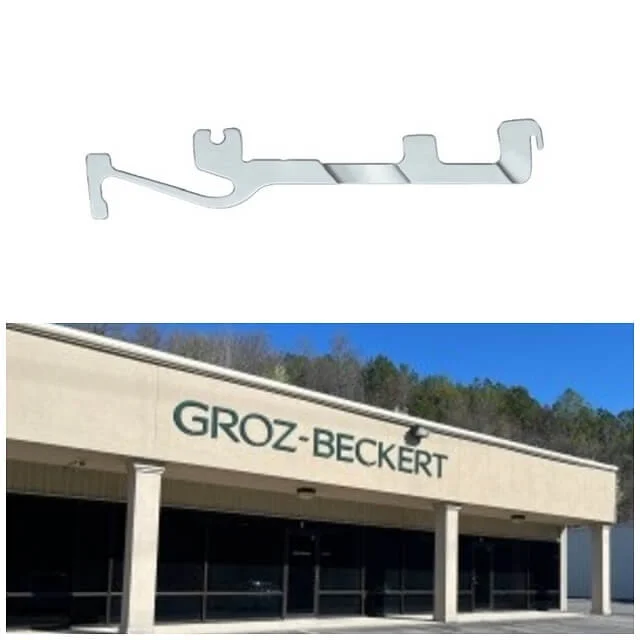
The company said the LCmax needle, developed specifically for circular knitting applications, can reduce the power consumption of knitting machines by up to 20 percent. The performance gain stems from an optimized wave-shaped shank geometry that significantly lowers friction inside the needle trick, one of the key sources of mechanical resistance in high-speed knitting.

By reducing friction between moving components, the LCmax design allows machines to operate more smoothly while requiring less motor load. Lower resistance also leads to reduced heat generation within the knitting zone, helping mills manage machine temperatures more effectively during continuous production runs. According to Groz-Beckert, these improvements enable manufacturers to maintain stable operating conditions even at elevated machine speeds.
Energy efficiency has become an increasingly urgent priority for textile producers as electricity costs remain volatile in many sourcing markets and global apparel brands intensify decarbonization requirements across their supply chains. Circular knitting, widely used to manufacture T-shirts, underwear and sportswear, runs at high speeds and large volumes, making even small efficiency gains per machine potentially significant when scaled across entire factories.
Groz-Beckert noted that the LCmax needle also contributes to reduced component wear, which can extend maintenance intervals and improve overall machine uptime. Lower wear rates are particularly important in high-throughput knitwear operations, where unplanned stoppages can quickly erode productivity and margins. The company added that the needle maintains a uniform loop structure even under demanding production conditions, helping mills avoid quality trade-offs while pursuing energy savings.
Also Read: Apparel Alliance Launches Unified Supply Chain Taxonomy for Textile and Fashion Industry
Industry observers say component-level innovations are gaining traction because they offer mills a relatively low-barrier pathway to efficiency improvements compared with full machine replacements. Retrofitting precision parts such as advanced needles can deliver measurable energy reductions while preserving existing capital equipment, an approach that is especially attractive to manufacturers operating on tight investment cycles.
The LCmax technology also aligns with a broader shift within the textile machinery ecosystem toward friction reduction, lightweight moving parts and smarter mechanical design. As the industry moves toward more resource-conscious production models, suppliers of critical machine elements are increasingly expected to demonstrate quantifiable contributions to energy and carbon reduction.
Groz-Beckert, which supplies needles and precision parts to textile producers in more than 150 countries, has been expanding its focus on process optimization technologies that support both productivity and sustainability goals. The company’s latest messaging underscores how incremental engineering improvements at the component level can translate into meaningful efficiency gains across the knitwear value chain.
With knitwear remaining one of the largest segments of global apparel production, technologies that reduce power consumption without compromising fabric quality are likely to draw continued attention from mills seeking faster returns on sustainability investments. For many manufacturers, solutions such as LCmax represent a pragmatic step toward lowering energy intensity while maintaining the high-speed performance demanded by modern textile production.