
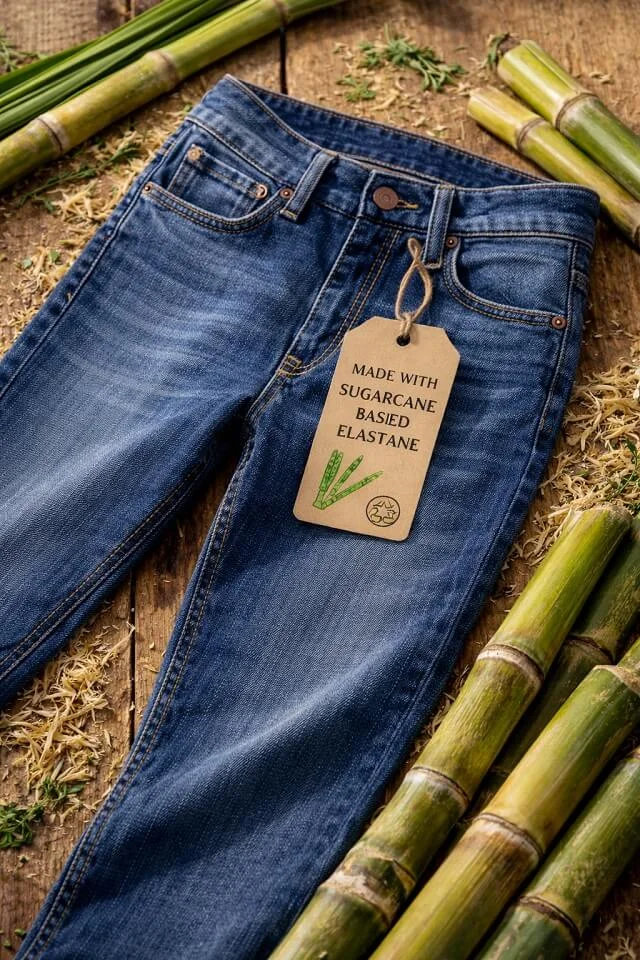
Hyosung TNC is accelerating its push into bio-based textiles, unveiling a new generation of sugarcane-derived elastane for denim at the Kingpins Amsterdam, as the fashion industry seeks scalable alternatives to fossil-based materials.
The company said its regen™ BIO elastane, partly made from renewable feedstocks, is designed to match the performance of conventional spandex while lowering carbon emissions, positioning it as a viable solution for brands transitioning toward bio-based inputs.

Hyosung, the world’s largest elastane producer by market share, is backing the shift with a planned $1 billion investment to build what it describes as the first fully integrated bio-based production system, spanning raw sugarcane feedstock to finished fiber.
The move reflects growing pressure on denim brands to decarbonize supply chains without compromising durability or stretch, a key challenge given elastane’s dependence on petrochemicals.
“At a moment when the industry is moving from commitments to action,” a company executive said, the goal is to make bio-based materials “the new baseline, not the exception.”
Also Read: Denim Water Footprint Sparks Global Supply Chain Pressure
Hyosung’s latest offering uses sugarcane as a primary feedstock, replacing earlier reliance on corn and enabling greater emissions reductions due to more established agricultural systems and scalability.
Alongside its bio-based push, the company is showcasing multiple sustainability pathways at Kingpins, including 100% recycled elastane derived from manufacturing waste and low-content stretch fibers that improve recyclability of denim garments.
Industry analysts say such multi-pronged approaches are becoming essential as brands balance competing priorities of recycled content, renewable inputs and end-of-life recyclability.
Hyosung is also supporting design innovation through its sponsorship of the Kingpins Future Fit Forum, where designers rework vintage Levi’s 501 using sustainable stretch materials, highlighting how next-generation fibers can be integrated into commercial denim products.
The launch comes amid broader momentum in the textile sector toward bio-based materials, with elastane seen as a critical bottleneck in achieving circular denim due to its impact on recyclability.
Hyosung’s strategy signals a shift from isolated material innovations to full-system solutions, as suppliers race to provide scalable, low-carbon alternatives to global apparel brands.