
Italy’s transition toward a sustainable and circular textile industry is gaining strong momentum with the nationwide deployment of advanced textile waste–recycling machinery, supported by funding from the National Recovery and Resilience Plan (PNRR). The initiative marks a decisive structural shift in how municipal textile waste is managed, moving away from disposal-focused practices toward industrial-scale recovery of valuable textile materials.
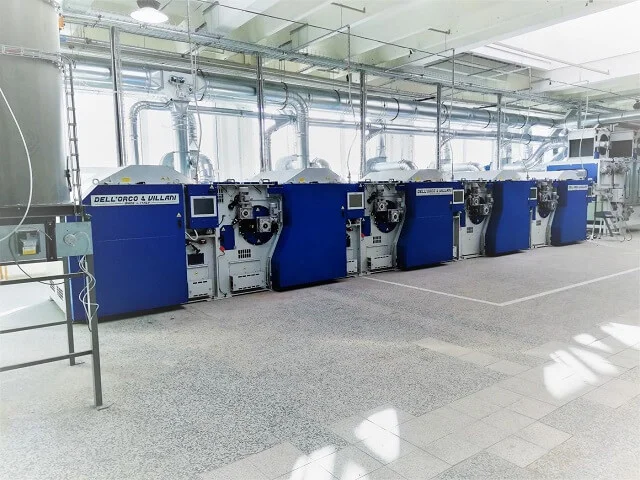
The machinery, supplied by DELL’ORCO & VILLANI SRL, is being installed at several municipal and multi-utility operators that have secured PNRR funding, including Haiki+, IGERS, Greenthesis Group, and the Textile Hub operated by ALIA SERVIZI AMBIENTALI SpA.

The newly delivered systems are engineered specifically for recovered textile waste, one of the most complex waste streams in Europe due to fibre blends, contamination and the growing volumes generated by fast fashion. The machinery uses high-precision mechanical recycling processes based on controlled shredding and fibre-opening technology.
Also Read : EU Urged to Member States Clamp Down on Fashion Overproduction
This machine is designed to preserve fibre length and quality and enable higher-value reuse compared with conventional crushing methods. Integrated pre-sorting and impurity separation units remove non-textile elements such as buttons, zippers and labels, improving material purity, operational safety and downstream processing efficiency.
Advanced filtration and aspiration systems significantly reduce airborne dust and microfibre emissions, aligning operations with increasingly stringent environmental and workplace health standards. Designed with modular and scalable architectures, the systems allow municipal operators to expand capacity as textile collection volumes rise under EU mandatory separate collection requirements.
Also Read : How Climate Influences Global Fashion Demand
The rollout directly supports Italy’s textile sustainability objectives and the European Union’s broader circular economy goals. By enabling the local treatment of post-consumer textiles, municipalities can divert thousands of tonnes of waste annually away from landfills and incinerators, two of the most carbon-intensive disposal routes.
Mechanical textile recycling consumes substantially less energy and water than the production of virgin fibres, helping to lower life cycle emissions and reduce Scope 3 carbon impacts across the textile value chain. At the same time, the installations strengthen Italy’s domestic recycling capacity, reduce reliance on textile waste exports and support the creation of local green and industrial jobs, while helping operators comply with EU textile waste directives on separate collection and recycling targets that are becoming fully enforceable across member states.
Industry analysts say the project signals a turning point for Italy’s textile recycling sector, as activity shifts from pilot initiatives to fully integrated, municipally operated recycling systems. The involvement of major environmental service providers reflects growing confidence that textile waste can be treated as a valuable resource rather than a cost burden. With an average of four truckloads of machinery shipped daily across Italy, the rollout also highlights the role of public–private cooperation under the PNRR framework in accelerating green industrial transformation.
Looking ahead to 2026, the combination of advanced recycling technology, targeted public funding and tightening regulation is expected to reshape Italy’s textile waste landscape, laying the foundation for a closed-loop textile system in which recovered fibres are reintegrated into industrial supply chains instead of becoming environmental liabilities.