
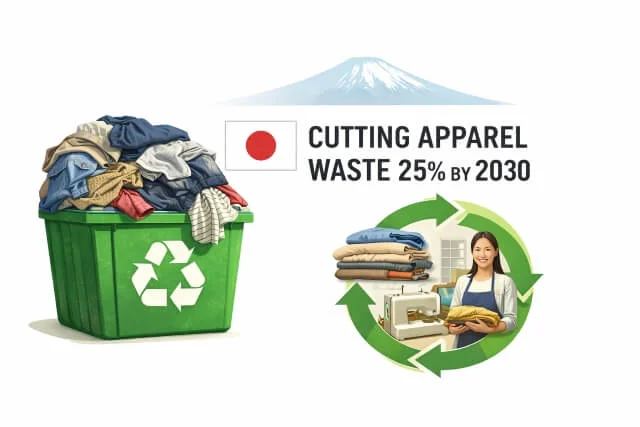
Japan aims to reduce apparel waste by 25 percent by fiscal 2030 compared with levels a decade earlier, as the government steps up efforts to curb the environmental impact of garment production and consumption.
The target will be anchored in a new national action plan to be compiled by March, which will promote wider reuse and recycling of clothing and call for coordinated action by central and local governments, apparel companies, and households. The initiative reflects growing concern over the carbon dioxide emissions, water use, and waste generated across the textile and apparel value chain.

According to an Environment Ministry report, an estimated 820,000 tonnes of new clothing were supplied to Japan in 2024, most of it imported. The report also found that around 8.38 billion cubic metres of water were consumed annually through dyeing and transportation processes associated with clothing supplied to the Japanese market, while about 95 million tonnes of carbon dioxide were emitted.
Despite Japan’s advanced waste management systems, the reuse and recycling of apparel remain limited. An estimated 560,000 tonnes of clothing were incinerated or sent to landfills in 2024, with roughly 90 percent coming from households, underscoring the scale of post-consumer textile waste.
To promote environmentally friendly “circular fashion,” the forthcoming action plan will set five key initiatives, including strengthening systems to collect used clothing, expanding reuse opportunities and extending product lifespans. Specific measures will be outlined for different stakeholders, with municipalities encouraged to improve collection rates and make second-hand clothing more accessible, particularly to people in need.
Also Read: Bangladesh Pushes Circular Fashion as Textile Waste Becomes Economic Asset
Apparel companies will be urged to design products that are easier to repair, reuse, or recycle, while consumers will be encouraged to recycle unwanted garments and choose environmentally friendly products.
The government hopes these steps will reduce reliance on incineration and landfilling and lower the environmental footprint of Japan’s fashion consumption.