

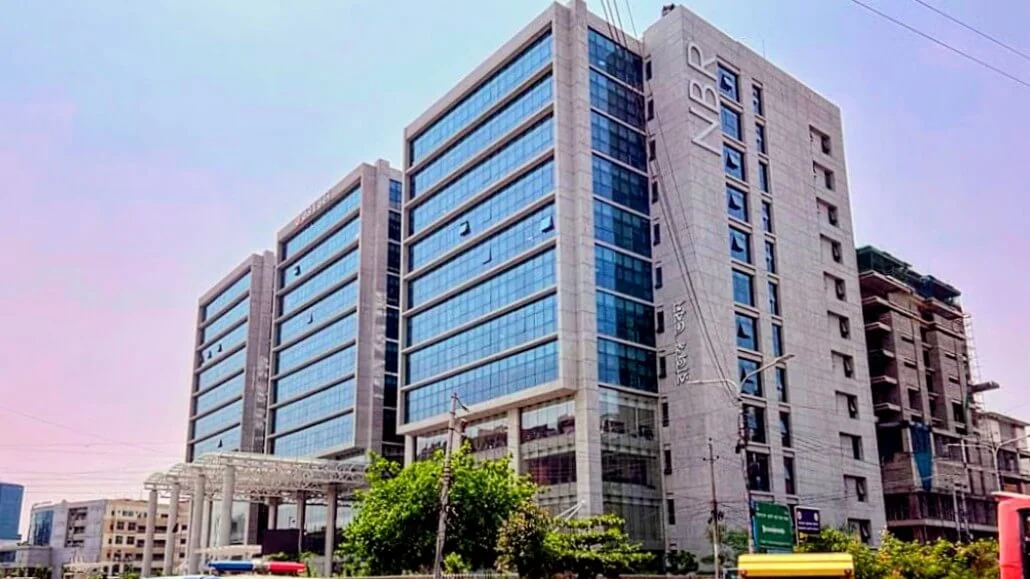
The National Board of Revenue (NBR) of Bangladesh has initiated a large-scale investigation into alleged misuse of bonded warehouse facilities by exporters, placing the bank transactions of around 100 export-oriented companies under detailed scrutiny. The move marks one of the most aggressive enforcement actions in recent years aimed at preventing diversion of duty-free raw materials into the domestic market.
Officials say the action is part of a broader effort to strengthen customs compliance, protect government revenue and ensure a level playing field for compliant businesses.

Why NBR Is Investigating Exporters’ Bank Transactions
Under Bangladesh’s bonded warehouse system, exporters are allowed to import raw materials without paying customs duties, provided those inputs are used solely to manufacture goods for export. Any sale of these duty-free materials or finished products in the local market without customs approval and duty payment constitutes a violation of the law.
According to NBR officials, intelligence assessments and risk profiling revealed mismatches between some exporters’ financial transactions and their declared export volumes. In several cases, transaction flows appeared significantly higher than what could be justified by reported exports, raising suspicion of illegal domestic sales of bonded goods.
To verify these discrepancies, the NBR has asked commercial banks to submit detailed transaction statements of selected exporters covering up to five years.
How the Investigation Is Being Conducted
Revenue officials are cross-checking bank data with customs import records, export declarations and bonded warehouse utilization reports. The analysis aims to identify unexplained income streams, abnormal cash flows and inconsistencies between financial and trade data.
Multiple tax zones, including Dhaka Tax Zone-8 and Dhaka Tax Zone-15, have already issued formal letters to banks requesting transaction details of suspected firms. While the NBR has not disclosed the identities of the exporters under review, officials confirm that the number of companies being examined could rise as more data is analysed.
A senior NBR official said the exercise is focused on evidence-based enforcement rather than indiscriminate action. Exporters whose records are found to be consistent with regulations will not face punitive measures, while confirmed violators will be dealt with under existing customs and tax laws.
Role of the Customs Bond Management System
The crackdown coincides with the full implementation of the automated Customs Bond Management System, which became mandatory from January this year. The system replaces the previously manual Utility Permission process and allows real-time tracking of bonded imports, stock balances and export usage.
The digital platform is integrated with Bangladesh Bank and customs databases, enabling better monitoring, automated audits and enhanced risk assessment. NBR officials believe the system will significantly reduce loopholes that previously allowed misuse of bonded facilities.
Authorities have also announced that physical inspections of bonded warehouses will be intensified to verify stock positions and production records alongside digital audits.
Concerns Over Revenue Loss and Market Distortion
The bonded warehouse system has long been criticized for weak oversight, particularly in sectors such as textiles, garments and plastics. Local manufacturers have repeatedly alleged that duty-free yarn, fabric and other inputs imported under bond are illegally sold in the domestic market.
Industry estimates suggest that the value of diverted bonded raw materials could amount to billions of dollars annually, though no official figures are available. Such practices result in significant revenue losses for the government and distort market competition by undercutting local producers who pay full duties and taxes.
Textile mill owners argue that unchecked bond misuse discourages domestic investment and undermines fair pricing in the local market.
Industry Reaction and Exporter Concerns
Exporter associations have reacted cautiously to the NBR’s move. While many support efforts to eliminate abuse of bond facilities, they have urged authorities to ensure targeted, transparent and fair enforcement.
Industry leaders stress that the majority of exporters comply with bonded warehouse rules and warn that overly aggressive or prolonged investigations could disrupt legitimate export operations. They have called for timely resolution of cases and clear communication to avoid uncertainty in the export sector.
At the same time, compliant exporters hope that stricter enforcement will help restore credibility to the bonded system and eliminate unfair competition from non-compliant firms.
Potential Penalties for Violators
Exporters found guilty of misusing bonded facilities may face recovery of evaded duties, financial penalties, suspension or cancellation of bonded warehouse licenses, and possible legal action under customs and tax regulations.
NBR officials have warned that repeat offenders and cases involving large-scale diversion will be dealt with strictly. The authority has reiterated that the crackdown is aimed at safeguarding public revenue rather than creating obstacles for genuine exporters.
Implications for Bangladesh’s Export Economy
The investigation comes at a critical time as Bangladesh prepares for major economic transitions, including graduation from least developed country status and potential changes to trade privileges. Strengthening compliance in export incentive schemes such as bonded warehouses is viewed as essential to maintaining international credibility.
As the NBR continues its financial scrutiny, the outcome is expected to send a strong signal across the export sector. While the move may increase compliance costs in the short term, policymakers believe it will ultimately strengthen governance, protect domestic industries and improve the sustainability of Bangladesh’s export-driven growth.
Also Read: Bangladesh’s new Export Challenges with India’s $504.6 million MASS