
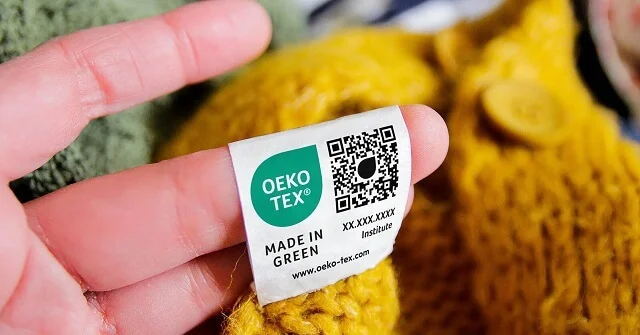
The OEKO-TEX MADE IN GREEN label has been classified as “trustworthy” in the latest textile label guide published by environmental campaign group Greenpeace, underscoring growing demand for credible sustainability verification in the global fashion industry.
The assessment reviewed more than 21 textile certification systems currently used across apparel and home textiles supply chains. According to the evaluation, only a limited number of labels met the highest credibility threshold, reflecting intensifying scrutiny of environmental and social claims as regulators and consumers push back against greenwashing.

The MADE IN GREEN label is a consumer-facing certification that verifies textile and leather products have been tested for harmful substances and manufactured in facilities audited for environmental performance and socially responsible working conditions. Each certified product carries a unique QR code that allows buyers to trace key stages of production, a feature that has gained importance as brands face mounting pressure to improve supply chain transparency.
OEKO-TEX said the recognition highlights the strength of integrated certification systems that combine chemical safety, environmental management and social compliance. The label builds on the organization’s broader framework, which includes the widely used STANDARD 100 testing protocol and the STeP (Sustainable Textile & Leather Production) facility certification.
Industry observers say the Greenpeace guide arrives at a pivotal moment for the apparel sector. Governments in the European Union and other major markets are tightening rules around environmental marketing and corporate due diligence, forcing brands and suppliers to substantiate sustainability claims with independently verified data.
The textile and fashion industry is widely estimated to account for between 4% and 8% of global greenhouse gas emissions, while also contributing significantly to water pollution through dyeing and finishing processes. At the same time, the rapid proliferation of eco-labels has created confusion among consumers and procurement teams, prompting calls for clearer benchmarking of certification schemes.
Also Read: ERI executive earns GRI sustainability certification
Greenpeace’s guide evaluates labels across several criteria, including chemical management, supply chain coverage, third-party verification and protection of workers’ rights. Certifications that fail to demonstrate robust, independently audited systems typically receive lower credibility scores, the group said.
For manufacturers and exporters, particularly in major production hubs across Asia, the rating could influence sourcing decisions by international brands and retailers. Bangladesh, Vietnam and other key apparel exporters have seen rising demand for verifiable sustainability credentials as buyers seek to align with stricter environmental, social and governance requirements.
OEKO-TEX said interest in traceable labeling solutions has accelerated in recent years, driven by both regulatory momentum and shifting consumer expectations. The organization added that digital traceability tools embedded in the MADE IN GREEN label are designed to help brands communicate verified product information more transparently at the point of sale.
Sustainability analysts note that while third-party guides such as Greenpeace’s are not regulatory instruments, they can shape market perception and procurement policies, particularly in Europe where environmental claims are under heightened scrutiny. Retailers increasingly rely on recognized certification systems to mitigate reputational and compliance risks in complex global supply chains.
The latest recognition also comes as competition intensifies among textile certification bodies seeking to demonstrate scientific rigor and global acceptance. As brands streamline their compliance frameworks, labels that combine chemical safety, environmental auditing and social responsibility in a single scheme are gaining traction.
Market participants say the next phase of differentiation will likely focus on data transparency, interoperability with digital product passports and alignment with emerging EU sustainability regulations. For exporters and manufacturers, the ability to provide verifiable, end-to-end traceability is expected to become a baseline requirement rather than a premium feature.
With sustainability claims under the microscope, the Greenpeace evaluation adds to the growing body of third-party scrutiny shaping how textile certifications are perceived. For OEKO-TEX, the “trustworthy” designation may strengthen adoption of the MADE IN GREEN label as brands and consumers seek clearer signals of environmental and social compliance in an increasingly crowded certification landscape.